By Rep. Mark Sauter, R-Sandpoint Reader Contributor
Greetings,
The cold weather is upon us. For legislators, it’s time to finalize plans for the 2026 legislative session in Boise. I keep a running list of local issues that may rise to the level of a legislative bill between each session. In years past, this list has led me to draft several bills for our district that “work” statewide. Many have become law.
As summer wound down, I began to prioritize my list. This year I’m particularly interested in property insurance coverage and costs. What caught my attention was more than just the premium increases (for many, those increases have been substantial). I have learned many property owners received “non-renewal” notices with little explanation of why or what can be done to keep their coverage and/or little time to find another carrier despite a long history with their insurance provider and no history of claims.
I started my research with the director of insurance in Boise. Our area has surpassed the statewide average for non-renewals in two of the past three years. In some of our zip code areas the “drop” rate approaches 10%. With little time for policyholders faced with a non-renewal notice to learn about their options, considerable stress (and expense) results for our property owners.
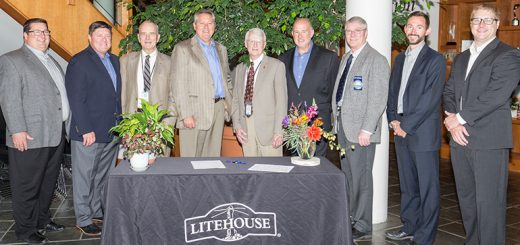
Rep. Mark Sauter. File photo
Statewide, average policy costs have risen about 60% from 2022 to 2024. Some of the factors are several significant wildland urban interface large loss fires, our similarities to those fire areas, significant losses by the same carriers we have in our area, the movement of more people to fire-prone areas, the increased cost of construction and the increased value of property. Some insurance carriers have left our area, too.
In some respects, property insurance is like property tax. It’s a “bottom line” cost that is unavoidable. It’s something homeowners must pay so they can keep a mortgage. In some cases, it can make or break a first-time homebuyer’s loan qualification. The difficulty in finding insurance (and the high cost) can be a factor in home values and property sales too. Local business and our economy can be affected, as well.
Fire departments are a factor in this. Their abilities (staff and equipment), water supply, distance from a property and dispatch systems are some of the factors considered by insurance companies when premiums are set.
With all the above in mind, I believe the following actions (at least) are worth some effort in 2026 to address this complex issue:
• Standardize and extend the time a policyholder has to find a new insurance carrier to at least 60 days. This action alone would help to reduce stress and give time to sort out all the options.
• Insurance carriers need to increase their transparency by advising policyholders of what factors influence their premium formulas. While some of this information may be proprietary, providing a general, understandable guideline for policyholders would be more than helpful. Fire mitigation is in everyone’s best interests (insurance companies and policyholders). Campaign fires like the recent Sunset fire are tragic and extremely expensive.
• Insurance carriers need to provide information for their policyholders to use in reducing their premiums. Insurance company research has developed many best practices that could be adopted by individual policyholders. This insurance information could be passed along to individual policyholders and even aggregated on the state insurance website.
• Consider adopting some targeted industry supported grant programs to incentivize “house hardening” actions by individual homeowners.
• Recognize the possible grading incentives available for local fire districts to embrace wildland fire interface prevention and preparedness. This could be done (cost free) by the Idaho Survey and Rating Board. ISRB is a nonprofit group that grades fire departments and commercial structures for use by member insurance companies.
• Familiarize our residents with insurance information options by ensuring the Idaho Department of Insurance is a well-used resource with a responsive consumer hotline (800-721-3272) for all insurance questions including non-renewal issues and a useful website with helpful information.
I have already started a conversation with some of our industry representatives regarding the issues mentioned above. I believe “we” can keep our regulation light and still get some things done that will help our policyholders and mitigate some of our fire risk.
It is an honor to serve our district. Questions, thoughts, suggestions? Please send them to me at [email protected].
Rep. Mark Sauter is a second-term Republican legislator representing District 1A. He serves on the Agricultural Affairs; Education; and Resources and Conservation committees.
Want to support independent local journalism?
The Sandpoint Reader is our town's local, independent weekly newspaper. "Independent" means that the Reader is locally owned and operated by people who were born and raised in Sandpoint. The Reader is owned by Publisher Ben Olson, Editor-in-Chief Zach Hagadone and Senior Writer Soncirey Mitchell. Sandpoint Reader LLC is a completely independent business unit; no big newspaper group or corporate conglomerate or billionaire owner dictates our editorial policy. And we want the news, opinion and lifestyle stories we report to be freely available to all interested readers - so unlike many other newspapers and media websites, we have NO PAYWALL on our website. The Reader relies wholly on the support of our valued advertisers, as well as readers who voluntarily contribute. Want to ensure that local, independent journalism survives in our town? You can help support the Reader for as little as $1.
TIMBER WARS: Six-part series, February-November 2022. GO READ IT»
WHERE ARE THE WORKERS?: Five-part series, September-October 2021. GO READ IT»
THE AMERICAN REDOUBT: Seven-part series, November-December 2017. GO READ IT»
STANDOFF AT RUBY RIDGE: 25 Years Later. Five-part series, August-September 2017. GO READ IT»
Curious about what media the locals use? Check our 2018 Local Media Survey. GO SEE »
Sandpoint in Pictures
Filmmaker Jimmy Matlosz of the Idaho Film Company has made a series of mini documentaries about influential Sandpoint locals, including the late Dann Hall and Erik Daarstad as well as icons Diane Michaels and Dan Shook. He is currently working on a series of interviews connected to the history of the Panida Theater. Jimmy is a 30-year veteran filmmaker who's work can be seen at dpmatlosz.com.
Meet the Reader
Ever wonder who makes the Reader happen? Here's a behind-the-scenes look pieced together by summer 2017 intern McCalee Cain in which Ben, Cameron and Lyndsie explain what exactly about the Reader keeps them coming back to their shabby (but well-loved) office each week.