Wandering the grassy paths of any of Sandpoint’s historic cemeteries, it’s hard not to wonder what cruel twist of fate might have sent each grave resident to their eternal slumber. Luckily for those with a macabre curiosity, the Bonner County Historical Society and Museum has compiled an online archive of all the area’s historic newspapers, which invariably cataloged citizens’ lives and deaths beginning as far back as 1892.
What follows are a few graves from Sandpoint’s Pinecrest Memorial Park and Lakeview Cemetery, as well as what we know about their occupants.
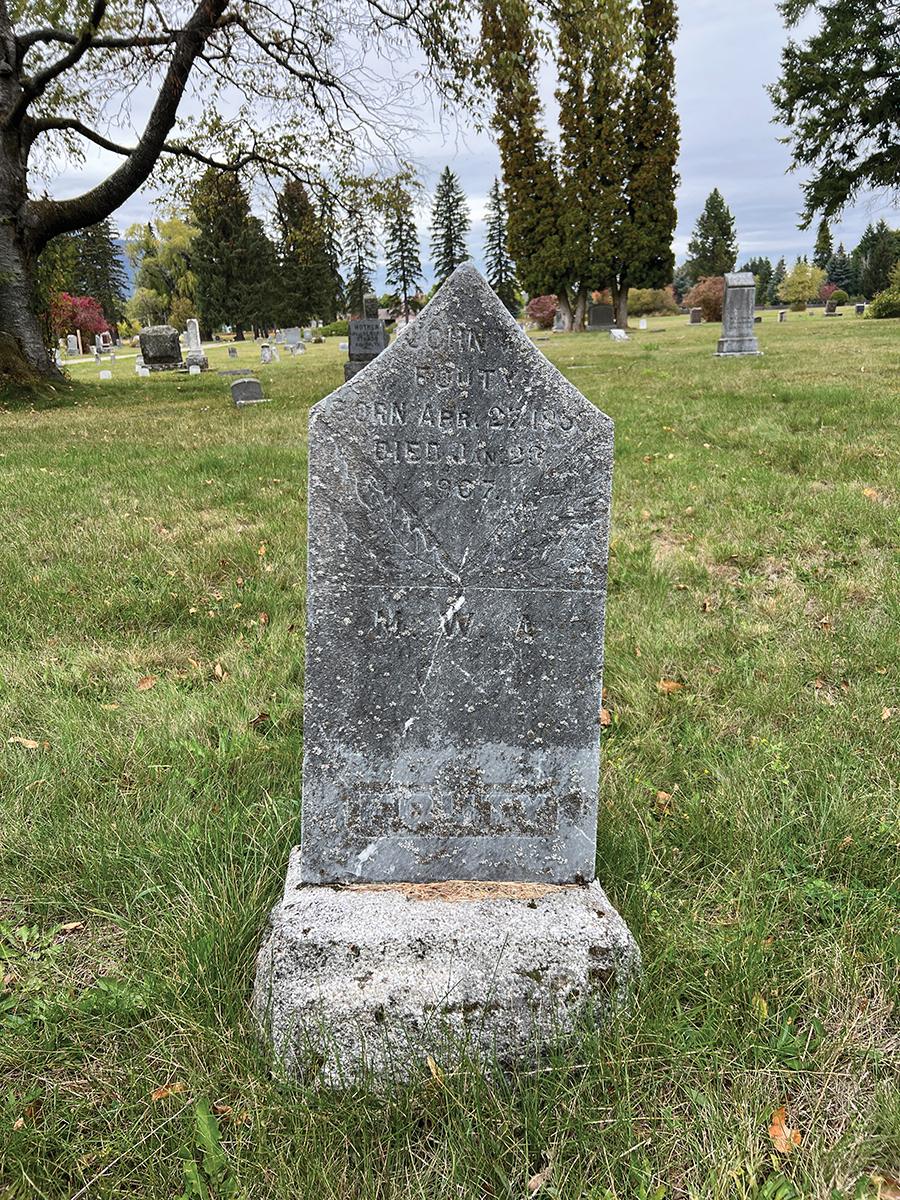
John W. Fouty, 1850-1907: Falling tree
Photo by Soncirey Mitchell
Originally from West Virginia, Sandpoint resident John Fouty moved to the area in 1898 by way of Wisconsin with his daughter and “invalid wife,” Sarah Fouty, who died of her unknown illness shortly thereafter, according to Northern Idaho News. Fouty spent the rest of his life working as a logger at George Gunter’s logging camp near Lightning Creek, where he met his unfortunate end on the jobsite.
While sawing timber, a tree his co-workers were felling suddenly swung in an unintended direction, hitting Fouty “full across the chest,” reported the Pend d’Oreille Review.
“The tree drove him into the snow and then rebounded and as it went up [George] Woodburn pulled Fouty out from under it. The injured man gasped and was dead,” stated the paper.
As a member of Modern Woodmen, Fouty’s life insurance policy left his daughter a healthy $1,000 — the equivalent of $35,000 today.
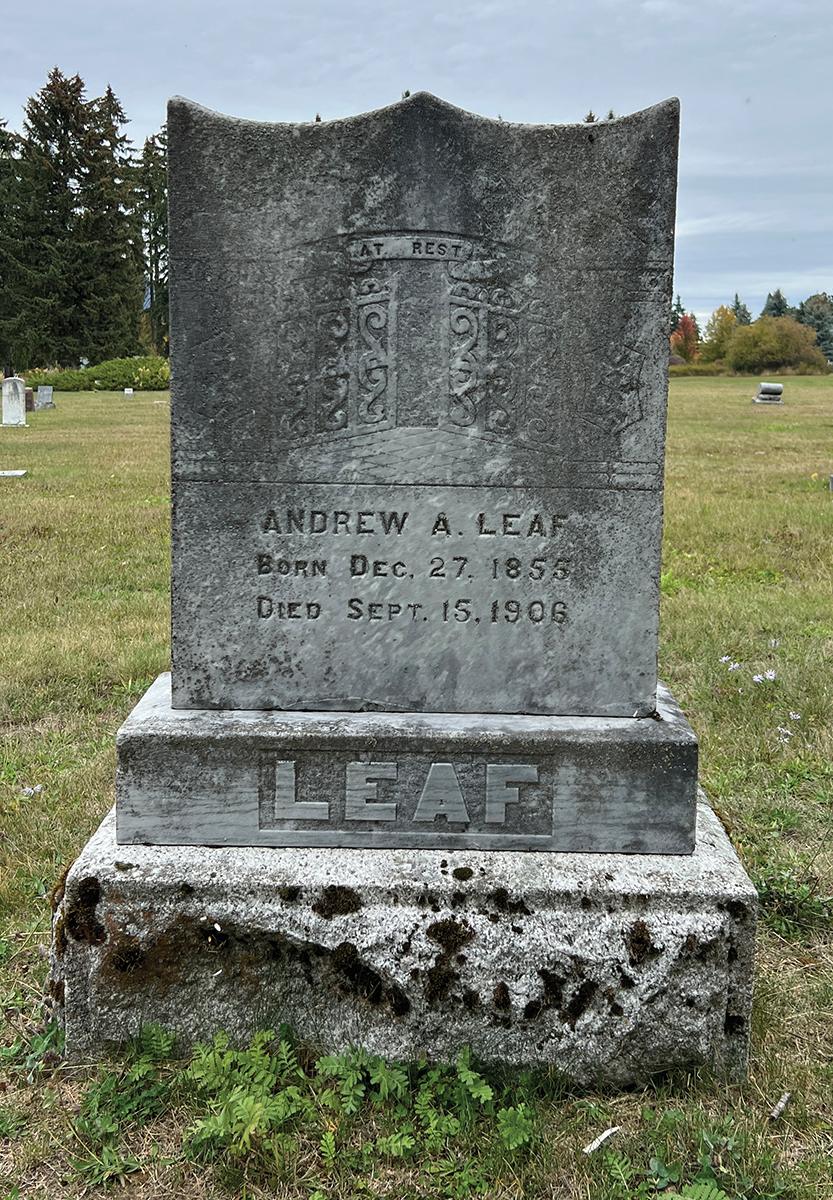
Andrew A. Leaf, 1855-1906: Drowned
Photo by Soncirey Mitchell
Leaf, a “well-to-do” Swede, moved to Sandpoint in 1894 to operate a saloon and ranch near McInnes Spur, the site of a historic railroad stop and sawmill. The Pend d’Oreille Review reported that, on the day of his demise, he and three friends had set off toward his home across the “Ponderay River, relentless and cruel” in a small, weathered boat. The men intended to leave on a hunting trip the following day, and carried with them guns, ammunition, gear and four hunting dogs — a heavy load for a small boat.
The dinghy began taking on water 300 feet from shore and, while attempting to swim to land, Leaf and his friend, Arvid Bodin, were apparently caught by a strong current and dragged below the waves.
“The hats of the two men floated on top of the water and were silent indications to the men clinging to the boat that their companions had sunk never to rise again,” reported the Review.
Leaf and Bodin were both members of the local Fraternal Order of Eagles, and their brothers expended considerable time and money attempting to recover the bodies. Volunteers dredged the river bottom with grappling hooks and set off dynamite to dislodge the sunken corpses, to no avail.
After giving up the search, the Eagles offered a $25 reward (nearly $1,000 in today’s dollars) to whomever could recover the bodies. Leaf was discovered floating downstream a week later — four days after Bodin’s body resurfaced — at which point his corpse was “in bad condition” and quickly buried, according to reports.
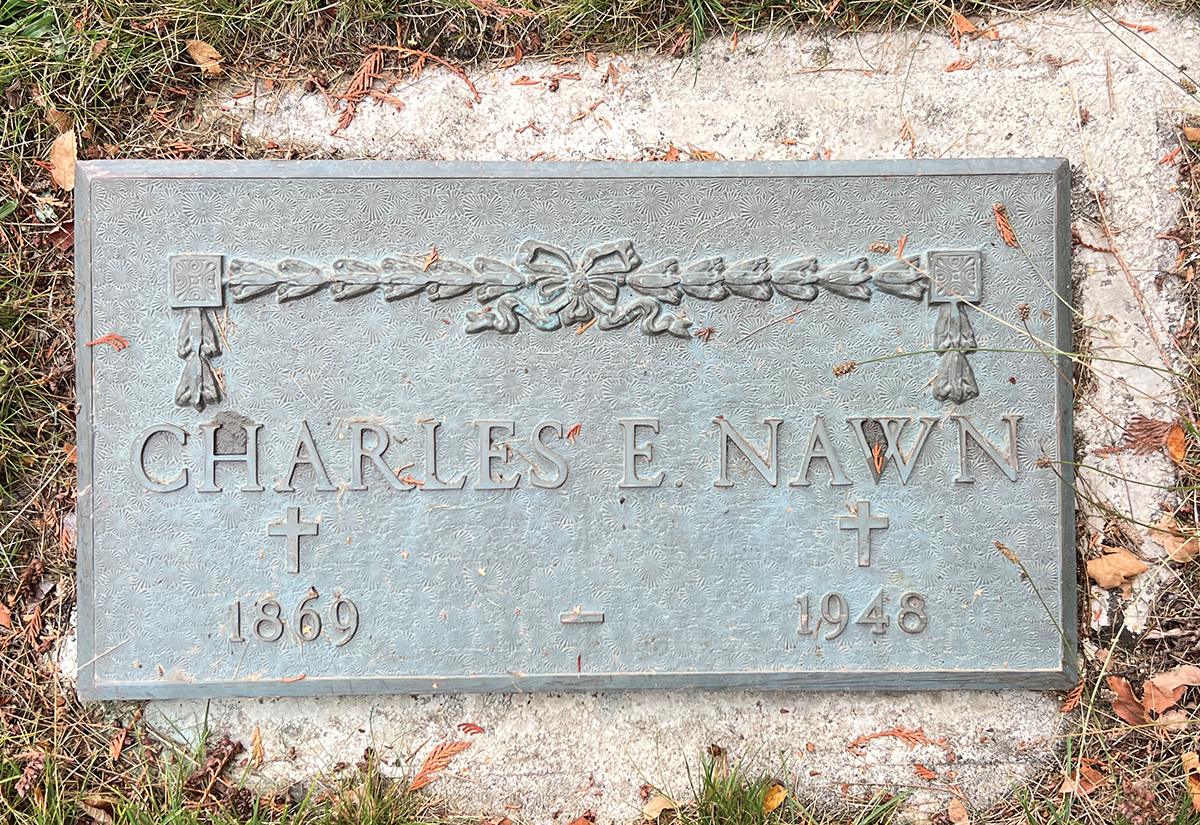
Charles E. Nawn, 1869-1958: Third-story drop
Photo by Soncirey Mitchell
In his lifetime, Charles Nawn was considered one of the most accomplished fox breeders in the Northwest. According to multiple reports in the Sandpoint News Bulletin, he specialized in silver foxes, producing furs that were “outstanding in quality” and fetched a considerable price.
Born in Boston, Nawn spent approximately 20 years in Alaska as a fur trapper, becoming known for his intelligence and adventurous nature even before settling down to a lavish life in Sandpoint.
His suspicious death occurred while staying at the Desert Hotel on a visit to Coeur d’Alene with his friend, Victor Barden. After calling on Nawn in the morning and receiving no reply, Barden reportedly broke through his hotel door — which had been “barricaded by a chair” — and found nothing but an empty room and an open window.
“Upon forcing the entrance, the open window attracted his attention and looking out, Nawn’s body could be seen on the well of the cement alley,” reported the Bulletin.
When discovered, Nawn was wearing nothing but his underwear and a wool shirt, and had suffered a fractured skull along with several other injuries that apparently killed him on impact. Though the door was intentionally blocked, and Nawn took the window screen with him in his fall, Prosecuting Attorney James W. Wayne and Coroner Dr. William T. Wood “announced that no inquest” would be held and ruled the death accidental.
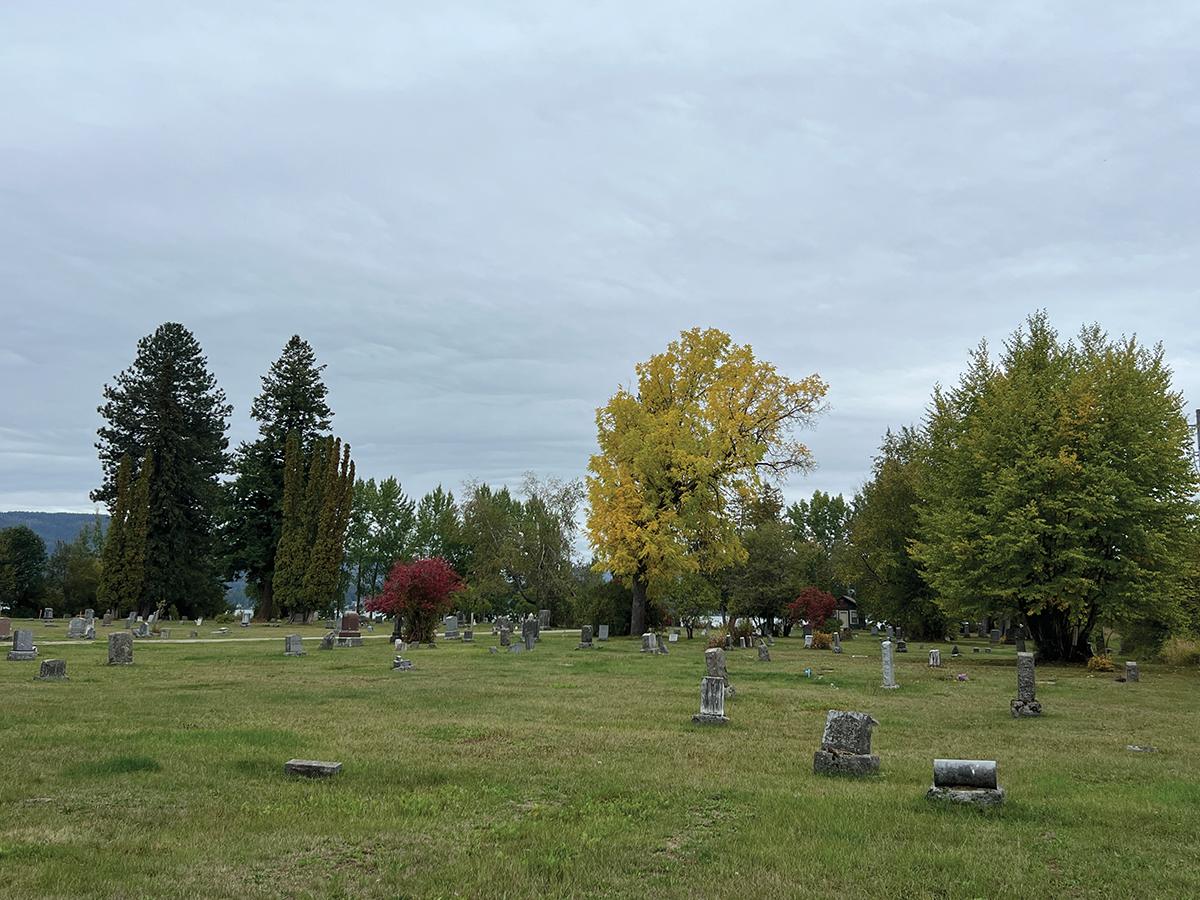
Lakeview Cemetery. Photo by Soncirey Mitchell
After his death, Susie Humphries, who identified herself as Nawn’s housekeeper, began to insert herself into the deceased’s affairs. She received permission to open Nawn’s deposit box and retrieve “several bonds in her name.” After seeing the contents of the box, she began referring to herself as Nawn’s common-law wife. She demanded the county appoint her as his estate’s administrator given Nawn had no immediate relatives. Nawn’s friends and cousins, who traveled to Idaho to fight Humphries in court, all testified that Humphries was nothing more than the housekeeper.
“Mrs. Humphries called no one to support her claim that she had participated in two Eskimo weddings with Mr. Nawn; the first before she divorced, and again after she had received her divorce from Mr. Humphries,” reported the Bulletin, using an outdated euphemism for an informal “marriage.”
The scandalous claim didn’t win Humphries any favors in court, and oversight of the estate instead went to the local public administrator.
Want to support independent local journalism?
The Sandpoint Reader is our town's local, independent weekly newspaper. "Independent" means that the Reader is locally owned and operated by people who were born and raised in Sandpoint. The Reader is owned by Publisher Ben Olson, Editor-in-Chief Zach Hagadone and Senior Writer Soncirey Mitchell. Sandpoint Reader LLC is a completely independent business unit; no big newspaper group or corporate conglomerate or billionaire owner dictates our editorial policy. And we want the news, opinion and lifestyle stories we report to be freely available to all interested readers - so unlike many other newspapers and media websites, we have NO PAYWALL on our website. The Reader relies wholly on the support of our valued advertisers, as well as readers who voluntarily contribute. Want to ensure that local, independent journalism survives in our town? You can help support the Reader for as little as $1.
TIMBER WARS: Six-part series, February-November 2022. GO READ IT»
WHERE ARE THE WORKERS?: Five-part series, September-October 2021. GO READ IT»
THE AMERICAN REDOUBT: Seven-part series, November-December 2017. GO READ IT»
STANDOFF AT RUBY RIDGE: 25 Years Later. Five-part series, August-September 2017. GO READ IT»
Curious about what media the locals use? Check our 2018 Local Media Survey. GO SEE »
Sandpoint in Pictures
Filmmaker Jimmy Matlosz of the Idaho Film Company has made a series of mini documentaries about influential Sandpoint locals, including the late Dann Hall and Erik Daarstad as well as icons Diane Michaels and Dan Shook. He is currently working on a series of interviews connected to the history of the Panida Theater. Jimmy is a 30-year veteran filmmaker who's work can be seen at dpmatlosz.com.
Meet the Reader
Ever wonder who makes the Reader happen? Here's a behind-the-scenes look pieced together by summer 2017 intern McCalee Cain in which Ben, Cameron and Lyndsie explain what exactly about the Reader keeps them coming back to their shabby (but well-loved) office each week.