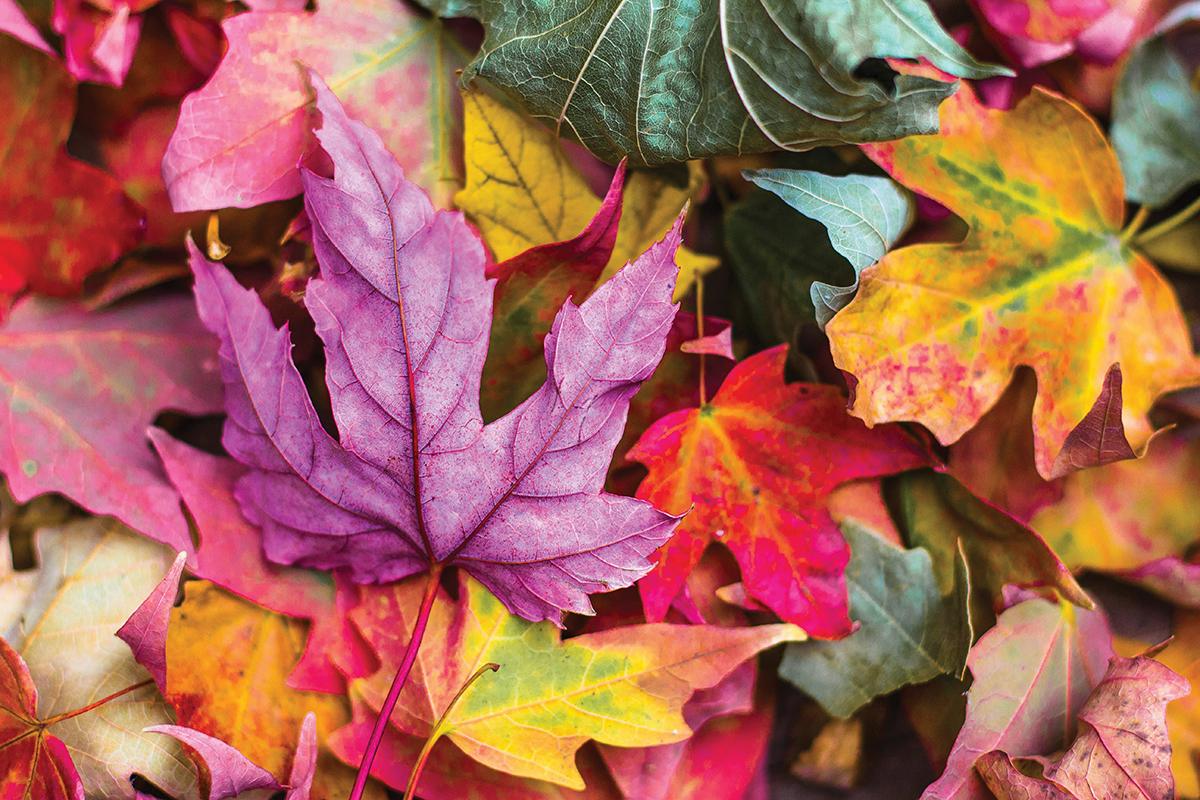
People have a lot of rituals. Among the most bizarre to me is the collection of biodegradable leaves into non-biodegradable plastic bags to be shipped off to a landfill. Many of us don’t think about what happens after the bags get picked up — the leaves simply disappear and the tree regrows some more the following spring.
Leaves decomposing on your lawn or in nature undergo a different process than leaves that decompose in a landfill. Leaves packed into a landfill are broken down by anaerobic organisms called methanogens. Methanogens undergo a process called methanogenesis to decompose material and spit out methane gas as a waste product. This happens exclusively in low-oxygen environments, such as swamps, rice paddies or landfills where organic material is present but there isn’t enough oxygen for bacteria or fungi to decompose it.
Organic matter in oxygen-rich environments undergo aerobic decomposition, which leaves carbon dioxide, water and heat as byproducts of the decomposition process. This happens when leaves are left out to decompose naturally. In the wild, this is a cycle. Plants absorb carbon dioxide from the air through photosynthesis, then the leaves fall and break down into carbon dioxide over the winter; rinse and repeat.
The mass dump of leaves at fall isn’t an accident or a thoughtless byproduct of evolution. It’s an adaptation by trees to prepare themselves for winter by utilizing their own waste material. Leaves create mats of air pockets that help insulate the trees’ roots throughout winter. It acts very similarly to a down duvet for your bed. Fluffy, semi-rigid structures create air gaps that keep everything beneath them insulated from the ambient air temperature. This helps keep the trees healthy through the winter. Even without their leaves, there is still water inside the trees during the winter, and being able to keep the roots from freezing completely for very long periods of time ensures the tree can keep surviving dormancy.
Temperature changes at different levels of the tree causes the water to move slowly during the winter, like the circulatory system of the human body. Our hearts act as a pump to move blood, which carries oxygen and nutrients through our vasculature, while trees use temperature changes during the winter. A tree keeping its roots warmer than the trunk or the limbs allows water to continue circulating within the tree’s own vasculature, and this is much easier for the tree to do when it has a blanket of leaves around its roots.
Fallen leaves serve a greater purpose than preserving the tree’s temperature. Animal life benefits immensely from the fallen leaves, which in turn also serves the trees come springtime. Small animals require fallen leaves for the same reason trees do: their core temperatures remain steady in areas where the air doesn’t freeze. The smaller an animal is, the more vital fallen leaves are for their continued survival.
Bumblebees and mason bees depend on leaf litter for overwinter survival. New queens burrow into the soil under leaf litter, relying on the stable temperatures to avoid freezing to death. Human removal of leaves directly contributes to wiping out entire generations of bumblebees, often without us even realizing it.
Leaves also provide shelter to other creatures such as frogs and caterpillars. Caterpillars that survive winter and metamorphose into butterflies and moths are essential pollinators. The fewer pollinators that survive the winter, the less chances that flowering trees and plants of all kinds will survive and propagate into future generations. This, in turn, creates a chain reaction that reduces the amount of food for future pollinators and leaf litter for their offspring to shelter beneath throughout the winter.
An absence of leaves creates a prime environment for slugs and other pests to flourish, while their natural predators lack shelter to combat them. By reducing hiding places, we are actively promoting more pests rather than less.
Leaves naturally decompose in the spring, but sometimes particularly large trees will create very dense mats of leaves. These can often be broken down effectively with a rake or chopped up with a tiller. This creates a layer of moisture-trapping mulch that helps keep plant roots moist through dry summer months and eventually creates nutrient-dense topsoil.
Of course, all of this works against a lush green lawn. Manicured green lawns struggle to grow under thick leaf litter and mulch — but is that really a bad thing? Lawn grasses provide little in the way of shelter, insulation or nutrients to fauna or the soil. It is understandable to not want tall grasses where pests like ticks can lurk while keeping a stark and beautiful green space adds beauty to the external areas of our homes.
I have to ask: Couldn’t this be achieved with more beneficial greenery? Clover provides great ground coverage with big, beautiful green leaves we associate with good luck (at least when the plant mutates and spawns a fourth leaf). Clover also provides sustenance for bees of all kinds as well as adding nitrogen to the soil. Clover seldom requires mowing and tolerates being walked on — especially with bare feet so long as you mind the bumblebees.
Bonner County has loads of native grasses and sedges that provide more value than bags of lawn grass. While some require mowing, others require very little. Numerous organizations and businesses can help guide homeowners on how to create a lawn that is well suited to native plants while repelling pesky deer and the ticks that like to come along for the ride.
Organizations that can help with this include the Kinnickinnick Native Plant Society, Kaniksu Land Trust, All Seasons Nursery & Landscaping as well as your local library. Abby, the library’s garden coordinator, is a wealth of information and resources who knows even more folks that could help transform a green desert into a thriving and beautiful ecosystem.
Stay curious, 7B.
Want to support independent local journalism?
The Sandpoint Reader is our town's local, independent weekly newspaper. "Independent" means that the Reader is locally owned and operated by people who were born and raised in Sandpoint. The Reader is owned by Publisher Ben Olson, Editor-in-Chief Zach Hagadone and Senior Writer Soncirey Mitchell. Sandpoint Reader LLC is a completely independent business unit; no big newspaper group or corporate conglomerate or billionaire owner dictates our editorial policy. And we want the news, opinion and lifestyle stories we report to be freely available to all interested readers - so unlike many other newspapers and media websites, we have NO PAYWALL on our website. The Reader relies wholly on the support of our valued advertisers, as well as readers who voluntarily contribute. Want to ensure that local, independent journalism survives in our town? You can help support the Reader for as little as $1.
TIMBER WARS: Six-part series, February-November 2022. GO READ IT»
WHERE ARE THE WORKERS?: Five-part series, September-October 2021. GO READ IT»
THE AMERICAN REDOUBT: Seven-part series, November-December 2017. GO READ IT»
STANDOFF AT RUBY RIDGE: 25 Years Later. Five-part series, August-September 2017. GO READ IT»
Curious about what media the locals use? Check our 2018 Local Media Survey. GO SEE »
Sandpoint in Pictures
Filmmaker Jimmy Matlosz of the Idaho Film Company has made a series of mini documentaries about influential Sandpoint locals, including the late Dann Hall and Erik Daarstad as well as icons Diane Michaels and Dan Shook. He is currently working on a series of interviews connected to the history of the Panida Theater. Jimmy is a 30-year veteran filmmaker who's work can be seen at dpmatlosz.com.
Meet the Reader
Ever wonder who makes the Reader happen? Here's a behind-the-scenes look pieced together by summer 2017 intern McCalee Cain in which Ben, Cameron and Lyndsie explain what exactly about the Reader keeps them coming back to their shabby (but well-loved) office each week.