Last month, I visited a convention in Spokane. It was pretty cool! I got to pose next to the Mystery Machine and got a hug from Scooby Doo.
I also got an extremely potent strain of COVID-19. What followed was 10 days of recovery followed by weeks of getting through long-COVID symptoms that are honestly still hanging on.
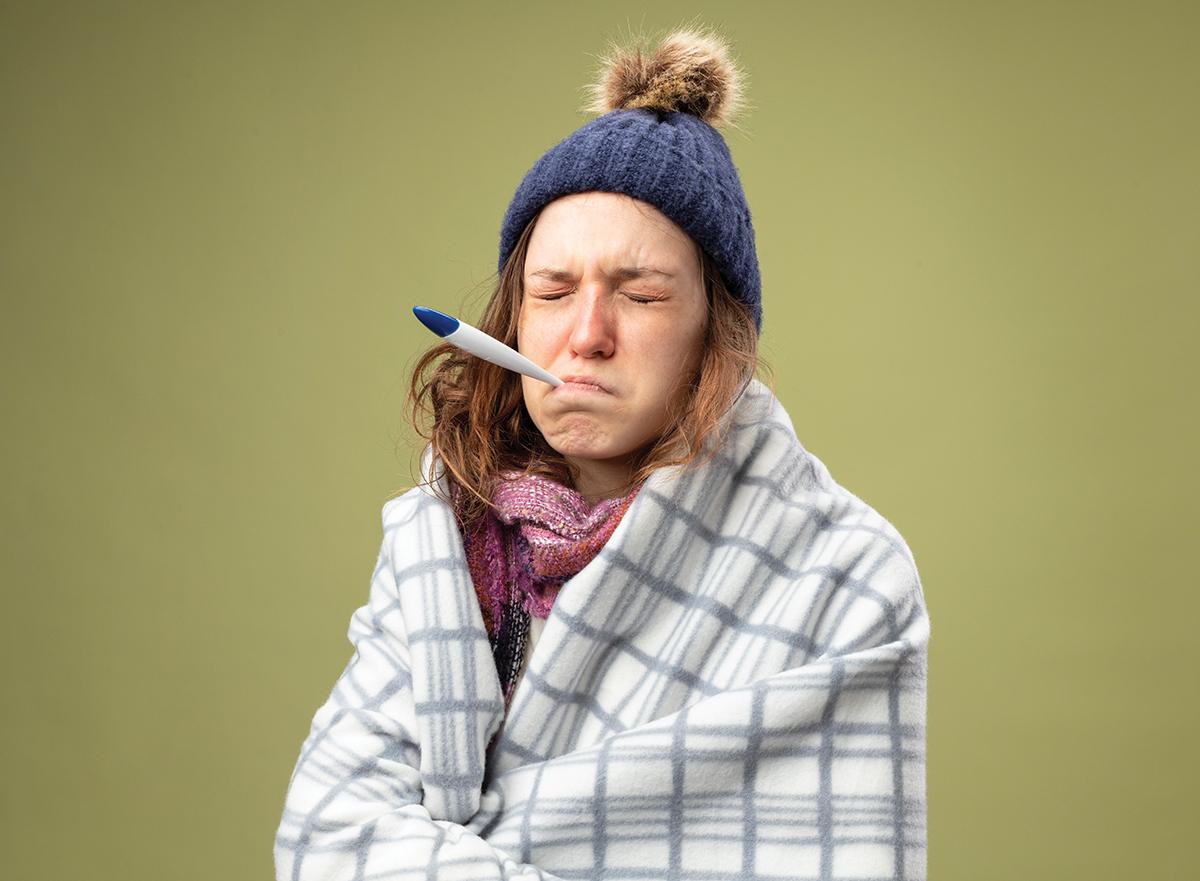
I’ll spare you the vivid details of the past month of my life, but the whole ordeal did make me curious about what a fever is, why we have it, and why it will sometimes fade and come back while we’re sick.
Beyond colored mucus, a scratchy throat, and sneezing or coughing, a fever is the key identifier that we have become infected with something and are now sick. It’s often the indicator that we need to stop moving around, infecting others, and instead see a doctor. The doctor prescribes bed rest or medication to reduce your fever and get you back on your feet.
What if the fever isn’t a symptom, and instead it’s something intentional that your body is doing to drive out the infection? What if a fever is a good thing?
A fever is a sign that your body has been compromised. The presence of the fever isn’t necessarily a bad thing, but it’s a symptom that your body may need help. Actively attempting to subdue the fever may do your body more harm than good. Instead, it’s good to give the body more of what it needs during an intense fever.
Often, antibiotics are given during a bacterial infection when a fever is present. This doesn’t treat the fever directly but instead aids in what your body is trying to accomplish with the fever. Taking medication with the specific intention to suppress your fever and get back on your feet faster actively undoes critical work your body needs to undertake while you’re sick.
You can envision your body at the cellular level as a warzone. Many cells in your body are civilians, just going about their day, while immune cells act as law enforcement making patrols, cleaning up the streets and establishing order. Then you visit a convention, and you have tangos rolling in by the millions. Suddenly, the invading cells or viruses are taking hostages. A full-body invasion has occurred, and the enemy is reproducing too fast for your body to recruit and train new immune cells. It needs time.
Enter scorched earth: a fever. Your body recognizes the threat has grown beyond something your immune cells can handle, so it turns up the heat. Your muscles repeatedly contract and generate heat. Your blood vessels constrict to retain it. The inside of your body is becoming a pressure cooker, and it’s by design.
Bacteria and viruses require specific parameters to flourish. These parameters often align perfectly with our body’s natural temperature. When that temperature rises, the heat starts to do things to bacteria: vital cell functions break down, cell membranes burst open. The same thing happens to your healthy cells, which is why viruses are not immune from the fever either. The real trick here is your body has to cook out enough of the invader before it deals irreparable damage to itself.
This is a function that animals developed more than 600 million years ago. How is it that bacteria and viruses haven’t adapted to circumvent fevers entirely?
This is actually a very interesting point, and it’s the body using the rapid evolution of diseases against themselves. Let’s say that you catch the common cold. Individual virions (the particles of a virus) survive the increased heat and reproduce with adaptations to survive and even thrive in an elevated body temperature. Then you sneeze on somebody at a convention who doesn’t have a fever, and the virus is now competing with another strain that is better adapted to surviving in people without a fever. The two viruses square off against each other, and inevitably the more prevalent one adapted for the present environment beats the other.
This doesn’t always work to perfection, but the immunological arms race is ultimately a numbers game, and the body being able to change its core temperature as needed has worked wonders to suppress the ability of diseases to adapt to this central defense mechanism.
Fevers do even more than this for our bodies. During a fever, we have a higher energy requirement while we are often too sick and tired to eat and consume fresh nutrients. This sucks, but it’s intentional. It’s our body limiting fresh intake of nutrients so that it burns out existing reserves to starve out invading disease. It creates a hot food desert in which the invaders are fighting each other for food while our immune cells tighten the noose and wipe out the threat while it’s desperate and distracted.
One of the most interesting things about our bodies is that we don’t have to be completely free of a virus or bacteria to be unaffected by it. In fact, immune cells are capable of retaining bits of viruses to use as reference for attacking future infections for a set amount of time. All our bodies need is to control the population of an invader just enough to keep it from doing really detrimental things to the rest of our body.
In the case of COVID-19, it seems that much of what affects us in the long term is actually the aftereffects of an aggressive immune response to a rapidly evolving virus.
It’s almost unimaginable how we would have survived the pandemic without our body’s ability to crank up the heat and cook out the bad stuff.
Stay curious, 7B.
Want to support independent local journalism?
The Sandpoint Reader is our town's local, independent weekly newspaper. "Independent" means that the Reader is locally owned and operated by people who were born and raised in Sandpoint. The Reader is owned by Publisher Ben Olson, Editor-in-Chief Zach Hagadone and Senior Writer Soncirey Mitchell. Sandpoint Reader LLC is a completely independent business unit; no big newspaper group or corporate conglomerate or billionaire owner dictates our editorial policy. And we want the news, opinion and lifestyle stories we report to be freely available to all interested readers - so unlike many other newspapers and media websites, we have NO PAYWALL on our website. The Reader relies wholly on the support of our valued advertisers, as well as readers who voluntarily contribute. Want to ensure that local, independent journalism survives in our town? You can help support the Reader for as little as $1.
TIMBER WARS: Six-part series, February-November 2022. GO READ IT»
WHERE ARE THE WORKERS?: Five-part series, September-October 2021. GO READ IT»
THE AMERICAN REDOUBT: Seven-part series, November-December 2017. GO READ IT»
STANDOFF AT RUBY RIDGE: 25 Years Later. Five-part series, August-September 2017. GO READ IT»
Curious about what media the locals use? Check our 2018 Local Media Survey. GO SEE »
Sandpoint in Pictures
Filmmaker Jimmy Matlosz of the Idaho Film Company has made a series of mini documentaries about influential Sandpoint locals, including the late Dann Hall and Erik Daarstad as well as icons Diane Michaels and Dan Shook. He is currently working on a series of interviews connected to the history of the Panida Theater. Jimmy is a 30-year veteran filmmaker who's work can be seen at dpmatlosz.com.
Meet the Reader
Ever wonder who makes the Reader happen? Here's a behind-the-scenes look pieced together by summer 2017 intern McCalee Cain in which Ben, Cameron and Lyndsie explain what exactly about the Reader keeps them coming back to their shabby (but well-loved) office each week.