By Reader Staff
What started as a highway construction project in Boundary County has resulted in archaeological findings that have the potential to rewrite the earliest history of human habitation in the region — as well as earned an award from the top transportation governing body in the nation.
Archaeologist Jyl Wheaton-Abraham, of the Kootenai Tribe of Idaho, and Idaho Transportation Department Project Manager CarrieAnn Hewitt received the award Oct. 31 from the American Association of State Highway and Transportation Officials in Philadelphia.
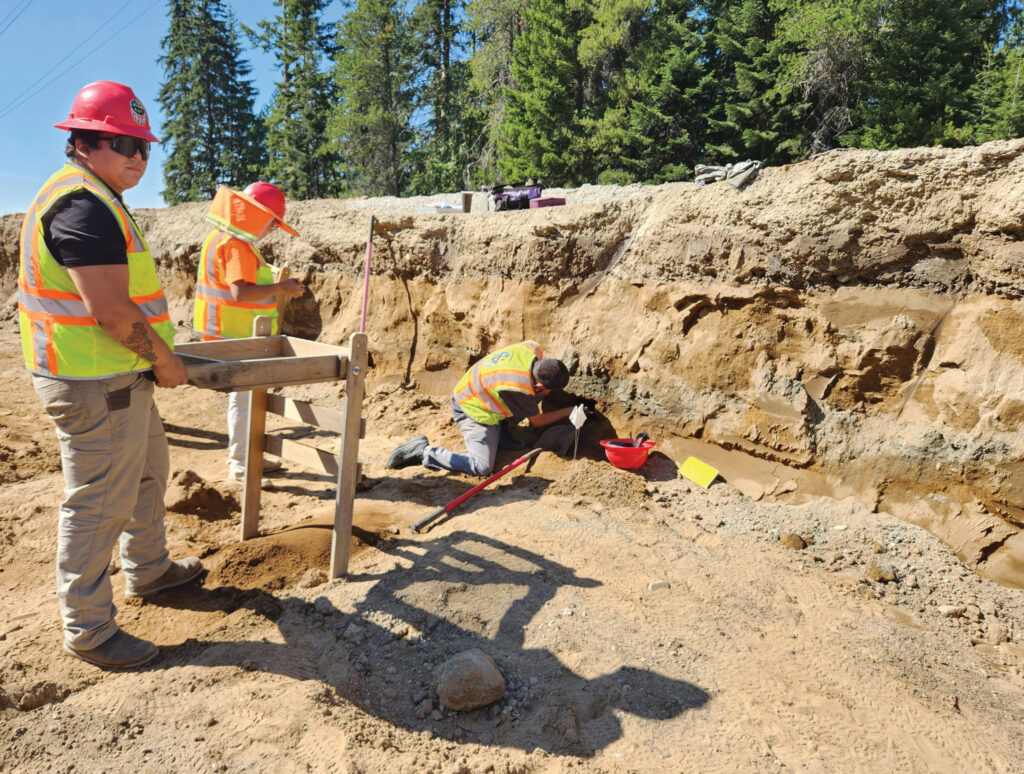
Crewmembers dig into the earth at the McArthur Lake project dig.
Photo courtesy of ITD.
The AASHTO President’s Transportation Award is the most prestigious accolade that state transportation departments can receive, and recognizes the discovery of hundreds of tribal artifacts during excavation along U.S. 95 near McArthur Lake.
“The U.S. 95 McArthur Lake Bridge showcased excellent tribal teamwork, to solve wildlife safety with cultural preservation success,” stated ITD Chief Deputy and Chief Operations Officer Dan McElhinney.
With a price tag of $11 million, the project rebuilt an existing two-lane section of roadway, added wider shoulders and replaced a box culvert over Deep Creek — which provides an outlet to McArthur Lake — with a 300-foot-span bridge to provide safe animal passage under the highway.
Discovery of the artifacts initiated a process of collaboration between ITD, the Kootenai Tribe of Idaho and contractors to ensure their collection and preservation. One of the discoveries was described as a “game-changer” for understanding the timeline of human existence in the upper Columbia River Basin — indicating that people had been living in the area a full 4,000 years earlier than previously thought.
Wheaton is a member of the Kootenai Tribe of Idaho with an M.A. in applied anthropology, and served as the lead archeologist on project discoveries.
“The Idaho Transportation Department deserves a lot of credit for recognizing early on that this had the potential to change the history of the Kootenai Tribe and the history of the area as well, and to not only encourage our work but also to play an active role in fostering the spirit of inclusiveness that came to define this project,” she stated.
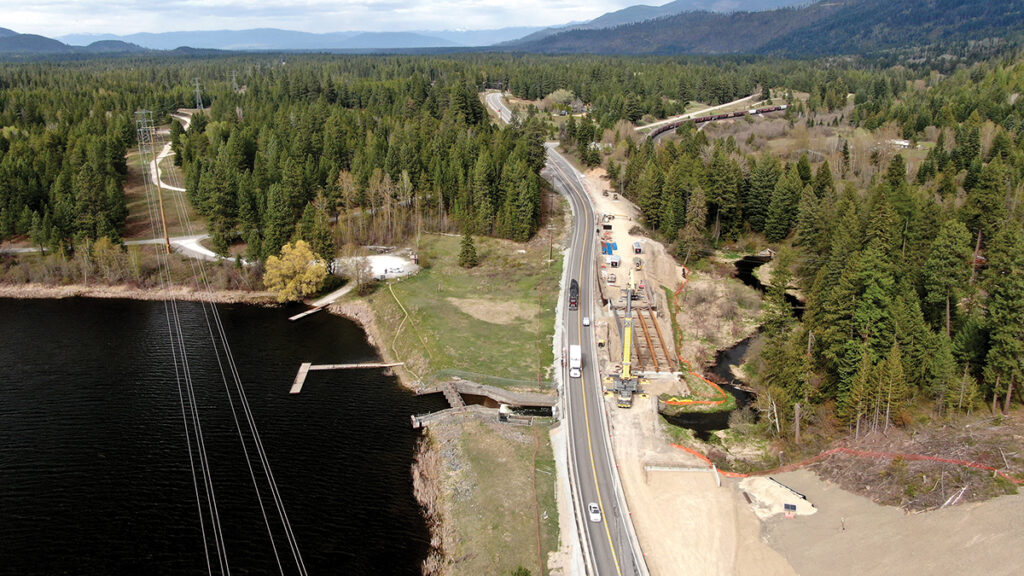
An aerial view of the project site at McArthur Lake north of Sandpoint. Photo courtesy of ITD.
Following collection, the artifacts are being cataloged and will undergo more investigation.
“It has been a pleasure working with the Kootenai Tribe on this,” said Hewitt. “In addition to keeping our project on schedule, I’ve developed a tremendous respect for the tribe and their willingness to work together. They’ve been a great partner and hopefully we’ve been able to reciprocate that in their eyes.”