I had a houseful of family over the weekend and, with St. Patrick’s Day right around the corner, I first mused about making a recipe to honor our ancestors. Instead, after helping several clients with upcoming trips to Italy and recently watching Nonnas on Netflix (which I highly recommend), I was inspired to honor International Women’s Day (Sunday, March 8) in an Italian style.
In Italy, it’s a major celebration honoring women. Traditionally, they receive large yellow mimosa flowers — symbols of strength and resilience — from loved ones.
What I love most about Italian food isn’t just the flavors; it’s how the family comes together. Little hands dusted in flour and steady older ones guiding them through each step. I love how a kitchen table becomes a gathering place. Around my table, we prepped and cooked, while I shared memories of kitchen time spent with my own mother and grandmother — how they rolled their egg noodles, cut them into ribbons and carefully laid them on the wooden dowels of our clothes rack to dry. Stories for them to hold — and fold into their own recipes.
I can easily recall my first pasta-making class 20 years ago in Parma, Italy, and my instructor’s description of how I would know the dough was ready to rest: “It should feel soft, like a newborn baby’s bottom.”
My grandchildren perched impatiently on kitchen stools as we prepared the pasta. Simple ingredients — flour and eggs — bring comfort. At first, the dough stuck to fingers, boards and clothes, but my grandchildren excelled. They kneaded, laughed and poked the dough until it turned soft and silky beneath their small palms. Roll, fold, roll again, until it feels like a baby’s bottom.
Now, children, we will let it rest.
Italian families have long understood that cooking together isn’t just about dinner; it’s about belonging. Their kitchens are the heart of the home, where stories are an integral part of the recipe. Though we are Irish to our bones, we’ve always admired that devotion to gathering around food. We recognize it.
If ever there were a dish that feels like a tribute to women, it might be handmade pasta. Historically, it was women who rolled it out on long wooden boards, who stretched dough thin enough to see light through, who fed generations with flour, eggs and ingenuity. Pasta is humble but powerful — much like the sturdy women who made it.
This column is for them. For the grandmothers who taught by doing. For mothers who stirred sauce with one hand while balancing babies with the other. And for daughters and granddaughters learning to shape dough and shape their own futures.
And for my own small apprentices, who proudly declared, “We made this ourselves.”
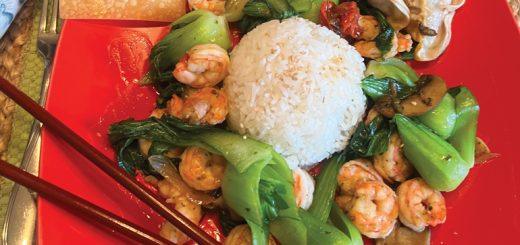
We paired our fresh fettuccine with tender, savory meatballs. Italians often serve meatballs as a separate course, but in our kitchen, we happily plop them atop ribbons of pasta and ladle sauce generously over both. Traditions evolve — maker’s choice.
Here are the recipe(s) we made together. Add family and conversation (and maybe some wine), and make it your own.
Homemade fettuccine and meatballs
Homemade fettuccine and meatballs. Photo by Marcia Pilgeram
These three easy components come together to create one memorable meal! The more helpers, the more fun. If you’re feeding vegetarians, simply divide the sauce and add meatballs to only half. Yield: 4-6 servings
Ingredients:
Fettuccine:
• 3 cups all-purpose flour (plus extra for dusting)
Pour the flour onto a clean work surface and form a well in the center. Crack the eggs into the well. Add the olive oil and salt.
Using a fork, gently beat the eggs, slowly incorporating flour from the edges. When the mixture becomes too thick for a fork, use your hands to bring the dough together.
Knead for 8-10 minutes, until smooth and elastic. If sticky, add a little flour; if too dry, lightly dampen your hands and continue kneading. Wrap in plastic wrap or cover with a bowl and let rest at room temperature for at least 30 minutes (do not refrigerate).
Roll out the dough by hand or with a pasta machine until thin but not tearing. Lightly fold and cut into ribbons about ¼ inch wide. Dust with flour, form into small nests, and let rest while you prepare the sauce.
Cook in well-salted, rolling-boiling water for 2-3 minutes, until al dente. (Note: Fresh pasta cooks very quickly!)
Red sauce:
Heat olive oil in a large saucepan over medium heat. Sauté the onion until soft and translucent, about 5 minutes. Add garlic and cook for 30 seconds until fragrant.
Stir in crushed tomatoes, tomato sauce, salt, pepper, sugar, and oregano (if using). Simmer gently for 30 minutes, stirring occasionally.
Taste and adjust seasoning. Stir in fresh basil just before serving.
Meatballs:
Combine all ingredients gently in a bowl — do not overmix. Roll into ping pong-sized balls. Sauté in a skillet over medium heat until lightly browned on all sides.
Transfer meatballs to the simmering sauce and cook gently for 20-25 minutes, until cooked through.
To serve: Toss fresh fettuccine with a generous amount of sauce. Plate, top with meatballs, and sprinkle liberally with freshly grated Parmigiano Reggiano and torn basil.
Want to support independent local journalism?
The Sandpoint Reader is our town's local, independent weekly newspaper. "Independent" means that the Reader is locally owned and operated by people who were born and raised in Sandpoint. The Reader is owned by Publisher Ben Olson, Editor-in-Chief Zach Hagadone and Senior Writer Soncirey Mitchell. Sandpoint Reader LLC is a completely independent business unit; no big newspaper group or corporate conglomerate or billionaire owner dictates our editorial policy. And we want the news, opinion and lifestyle stories we report to be freely available to all interested readers - so unlike many other newspapers and media websites, we have NO PAYWALL on our website. The Reader relies wholly on the support of our valued advertisers, as well as readers who voluntarily contribute. Want to ensure that local, independent journalism survives in our town? You can help support the Reader for as little as $1.
TIMBER WARS: Six-part series, February-November 2022. GO READ IT»
WHERE ARE THE WORKERS?: Five-part series, September-October 2021. GO READ IT»
THE AMERICAN REDOUBT: Seven-part series, November-December 2017. GO READ IT»
STANDOFF AT RUBY RIDGE: 25 Years Later. Five-part series, August-September 2017. GO READ IT»
Curious about what media the locals use? Check our 2018 Local Media Survey. GO SEE »
Sandpoint in Pictures
Filmmaker Jimmy Matlosz of the Idaho Film Company has made a series of mini documentaries about influential Sandpoint locals, including the late Dann Hall and Erik Daarstad as well as icons Diane Michaels and Dan Shook. He is currently working on a series of interviews connected to the history of the Panida Theater. Jimmy is a 30-year veteran filmmaker who's work can be seen at dpmatlosz.com.
Meet the Reader
Ever wonder who makes the Reader happen? Here's a behind-the-scenes look pieced together by summer 2017 intern McCalee Cain in which Ben, Cameron and Lyndsie explain what exactly about the Reader keeps them coming back to their shabby (but well-loved) office each week.