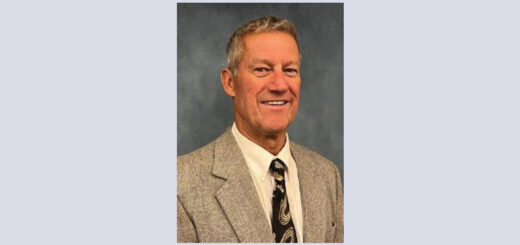
Commissioners consider “concierge medical services” for employees
By Soncirey Mitchell Reader Staff
Commissioners from the five northern counties met June 18 with Panhandle Health District officials to reconsider the organization’s Fiscal Year 2027 budget after voting it down in late May. County commissioners voted 3-2 to adopt the budget, which will provide for expanded clinical services and cost-of-living salary adjustments for the district’s employees.
The FY ’27 budget amounts to $12,299,702 — the lion’s share of which will go to personnel expenses — raised through taxes, permit and licensing fees and health services. Benewah, Bonner, Boundary, Kootenai and Shoshone counties will contribute a collective $2,216,903 — $470,211 of which will come from Bonner County.
At the May 20 meeting, commissioners took issue with increased expenditures for clinical services and worker COLAs, requesting that PHD return June 18 with alternative budget proposals without the adjustment or clinics in some or all counties.
The planned changes to clinical services are part of a monthslong effort by PHD to audit, refocus and revamp clinics within the district, hopefully increasing community usage by expanding days of operation and diversifying offerings. The district intends to hire a social worker, two medical assistants and a nurse practitioner to broaden services and focus on holistic, naturopathic and allopathic preventative care to counter rising national rates of chronic illnesses like heart disease, cancer and diabetes. They also intend to expand women’s health services, which, according to an internal audit, are PHD’s most utilized resources.
According to PHD Board of Health Chair Thomas Fletcher, eliminating the COLA would have freed $180,000 of the budget, while eliminating clinical services entirely would “liberate roughly $78,000” despite its $2.11 million budget.
“You are creating two conditions that converge if you kill the clinic,” said Fletcher at the June 18 meeting. “The first condition is that the clinic, you understand, generates a fair amount of revenue all on its own. It sees patients, and you bill for those clinical events. So if you kill the clinic, you have neutered the generating capacity of that enterprise.
PHD Board of Health Chair Thomas Fletcher, Kootenai County Commissioner Bruce Mattare and PHD Director Erik Ketner present the FY ’27 budget on June 16. Capture from YouTube.
“And the second condition is that there are overhead expenses — there are administrative expenses that are shared by all departments of Panhandle Health, and the clinic is sharing … its fair share of those administrative costs. But if you kill the clinic, you have not eliminated the other administrative costs.”
According to Fletcher, PHD anticipates a 200% return on investment, meaning for every dollar spent on clinical services, the district expects to earn three. This is because the cost of hiring additional personnel will be far less than the money earned from fees and insurance payouts from patients.
“We can look in our own historical records and see that a given nurse practitioner generates, in revenue, 3X her salary,” said Fletcher.
Further arguing on behalf of the clinics, Fletcher proposed that PHD could partner with each county to provide “managed health care options for county employees.” Though Bonner County has recently considered similar arrangements with private entities, the five northern counties had not discussed or budgeted for that option prior to the June 18 meeting.
“It’s an opportunity, potentially, for the counties to save some money — potentially, again — on their health care costs for their employees,” added Kootenai County Commissioner Bruce Mattare.
The counties would pay for “concierge medical services,” meaning employees would have the option to have bloodwork, physicals and other medical services done for free at any PHD clinic. In theory, this would help employees catch and address health issues early, eliminating the need for later county payouts for more costly medical procedures. According to Fletcher, unlike private medical entities, PHD would not provide the “standard cartel establishment medicine” or fall into common practices like the “pharmaceutical escalation trap,” which raise prices for both consumers and providers.
In response to concerns that increased clinical services would compete with rural hospitals, which are already struggling to earn revenue, Fletcher said that PHD would partner with other providers, which, according to Mattare, would ultimately help them eliminate common costs.
“One of the challenges for hospitals is when people show up — especially if they don’t have health insurance — and show up to the emergency room because they weren’t getting care beforehand and that actually hurts the hospitals,” added Mattare. “So, I think that there might be some opportunities where the pain points can be discovered for the hospitals and Panhandle Health can work to address the pain points and not create a deficit for the hospitals.”
Bonner County Commissioner Ron Korn echoed this point, later moving to adopt PHD’s FY ’27 budget with the proposed COLA and clinical services. The motion passed 3-2 with votes from Shoshone, Bonner and Kootenai county commissioners.
Want to support independent local journalism?
The Sandpoint Reader is our town's local, independent weekly newspaper. "Independent" means that the Reader is locally owned and operated by people who were born and raised in Sandpoint. The Reader is owned by Publisher Ben Olson, Editor-in-Chief Zach Hagadone and Senior Writer Soncirey Mitchell. Sandpoint Reader LLC is a completely independent business unit; no big newspaper group or corporate conglomerate or billionaire owner dictates our editorial policy. And we want the news, opinion and lifestyle stories we report to be freely available to all interested readers - so unlike many other newspapers and media websites, we have NO PAYWALL on our website. The Reader relies wholly on the support of our valued advertisers, as well as readers who voluntarily contribute. Want to ensure that local, independent journalism survives in our town? You can help support the Reader for as little as $1.
TIMBER WARS: Six-part series, February-November 2022. GO READ IT»
WHERE ARE THE WORKERS?: Five-part series, September-October 2021. GO READ IT»
THE AMERICAN REDOUBT: Seven-part series, November-December 2017. GO READ IT»
STANDOFF AT RUBY RIDGE: 25 Years Later. Five-part series, August-September 2017. GO READ IT»
Curious about what media the locals use? Check our 2018 Local Media Survey. GO SEE »
Sandpoint in Pictures
Filmmaker Jimmy Matlosz of the Idaho Film Company has made a series of mini documentaries about influential Sandpoint locals, including the late Dann Hall and Erik Daarstad as well as icons Diane Michaels and Dan Shook. He is currently working on a series of interviews connected to the history of the Panida Theater. Jimmy is a 30-year veteran filmmaker who's work can be seen at dpmatlosz.com.
Meet the Reader
Ever wonder who makes the Reader happen? Here's a behind-the-scenes look pieced together by summer 2017 intern McCalee Cain in which Ben, Cameron and Lyndsie explain what exactly about the Reader keeps them coming back to their shabby (but well-loved) office each week.