Fairgrounds employees have no ‘reporting responsibility’ to Fair Board
By Soncirey Mitchell Reader Staff
The Bonner County Fairgrounds has been at the center of a heated discussion since a special Bonner County board of commissioners meeting Dec. 4, during which the board sought clarity from legal counsel and human resources on the Fair Board’s powers. The commissioners voted to rewrite fairgrounds’ employee job descriptions to emphasize that workers reported to the BOCC and to further examine the division of duties between the county and the Fair Board.
The special meeting, though agendized a week in advance, garnered minimal public participation and did not include representatives from the Fair Board, aside from their liaison in the Prosecutor’s Office, Robert Able. Human Resources Director Jonathan Holmgren began the meeting by explaining concerns raised with him by fairgrounds employees, who were unclear to which board they reported.
“It’s been recently brought to my attention in my role as the HR director, that Bonner County is currently at risk regarding employee relations and employment practices pertaining to the county fairgrounds personnel,” said Holmgren, describing the employees as “frustrated,” “discouraged” and “demoralized,” with “no clear sense of direction or guidance concerning their roles and responsibilities.”
BOCC commissioners (L to R): Brian Domke, Asia Williams and Ron Korn. Photo by Soncirey Mitchell
The issues stemmed from the fact that, though they are technically county employees, fairgrounds staff had been receiving direction from the Fair Board.
“It is my professional opinion, as the human resources director, that the county Fair Board has been operating beyond the scope of its responsibility for some time and has veered into the lane of responsibility that belongs to the BOCC under Idaho Code Section 31-807,” said Holmgren, citing code that outlines the BOCC’s management of county property.
“This has resulted in the Fair Board thinking that they employ the county fairgrounds personnel and can direct their work,” he added.
As the discussion progressed, both Nate Adams, of the Bonner County Prosecutor’s Office, and BOCC Chair Brian Domke clarified that this alleged overreach was not the Fair Board’s doing. Rather, the BOCC had, in years past, delegated official and “de facto” responsibilities to the board that are not explicitly outlined in statute. The Fair Board, which reports to the BOCC, has the authority to take on such responsibilities at the commissioner’s request.
“It seems like we have a long history, as a county, of mixing and mingling the duties and responsibilities of what the management of the fairgrounds should be, as compared to the management and coordination of the fair event,” said Domke.
“From what I’m hearing from legal counsel, it’s not that the Fair Board has necessarily ‘operated beyond its scope of responsibility,’ because it sounds like the [BOCC] has, either through intentional actions or lack of action, essentially delegated greater responsibility than just the planning and management of the fair event,” he later added.
Holmgren’s chief concern, he argued, was that the Fair Board did not have authority over county employees working at the fairgrounds. He focused primarily on the role of fairgrounds manager — a position currently held by Mark Knapp — which is “funded, paid for and hired by the board of commissioners.”
He cited Idaho Code 22-205 as contributing to the confusion, as it states that the Fair Board “shall select and employ a competent secretary whom they shall vest with general managerial powers,” seemingly combining the fair manager and Fair Board secretary positions. Domke and Commissioner Ron Korn agreed with Holmgren’s request to rewrite the fair manager’s job description — as well as any related positions — to clearly place the employees under the BOCC.
Domke directed HR to revise the language to show that county employees “have no direct reporting responsibility to the Fair Board. There’s simply a coordination responsibility with the Fair Board, which would be no different than any other renter [or] user of the county-owned fairgrounds property.”
This discussion follows recent financial concerns that came to light after the resignation of former-Fair Board Treasurer Samantha Schmidt, who had been working without a contract for months. Schmidt, who earned $5,000 per month at her job, returned what appeared to be her final paycheck to the Bonner County comptroller, as neither she nor the Fair Board could determine if she had been overpaid.
Schmidt did not respond to a request for comment as of press time.
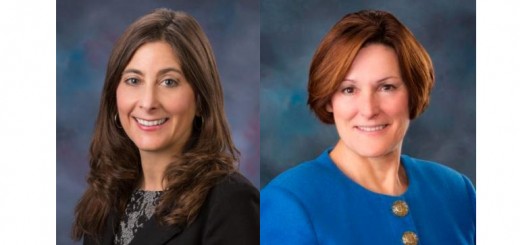
Fairgrounds Bookkeeper Jennifer Wyman and Fair Board Treasurer Staci McBrayer took over for Schmidt in November, at which time they discovered multiple instances of incorrect information in the financial reporting, including improperly cleared checks and miscalculated profits and expenses. Both women will work with the BOCC and the Fair Board to sort out the financial statements going forward.
At the Dec. 4 meeting, commissioners further considered reducing the scope of the Fair Board’s oversight from the whole year to the time immediately before, during and after the annual fair — treating it as a regular tenant, rather than giving the board authority to organize events throughout the year, like the Christmas Craft Fair.
The BOCC made no decisions Dec. 4 on the future scope of the Fair Board’s oversight; however, Korn moved to look into the division of power and to instruct staff to begin revising job descriptions. The motion passed 2-0, with Commissioner Asia Williams absent.
Following the vote and during the regular Tuesday, Dec. 9 business meeting, Williams voiced her opposition to both the meeting and the motion, echoing concerns raised by members of the public. Despite a contrary ruling by the Bonner County Prosecutor’s Office, Williams alleged that the special meeting was a violation of Idaho Open Meeting Law, which stipulates that, “Agenda items should be listed with specificity and not buried in catchall categories such as ‘director’s report.’”
Because the Dec. 4 meeting agenda included “Action Item: Discussion/Decision Regarding Fair, Fairgrounds, Fair Board” with no supplemental information, Williams argued that the board had not properly noticed the meeting. She requested a review by the Prosecutor’s Office, which stated that the “agenda item, although vague, was not believed to constitute an Open Meeting Law violation,” according to Williams.
“I must express my disappointment regarding the decision rendered by your office,” Williams wrote in an email to Prosecutor Louis Marshall. “Based on this decision, it appears that generic items may be placed on a public agenda and subsequently voted upon. My concern is that the statute does not seem to differentiate between required posting based on the severity of the decision being made. It is critical that the public knows precisely what is being voted on so they can choose whether or not to participate in the process.”
According to Williams, Marshall offered to send the decision to a special prosecutor for review, but she declined to challenge the ruling further as, “It’s not worth it.”
Members of the public criticized the board’s Dec. 4 meeting and the possibility of decreasing the Fair Board’s oversight, saying the board was “horribly blindsided,” in the words of resident Amy Lunsford.
In response to increased hostility, especially directed at Korn by members of the public who spoke at the Dec. 9 meeting, the commissioners reiterated that the BOCC has “to accept more of the blame” for the current confusion regarding the board’s powers. Though commenters alleged that the commissioners had already reduced the board’s powers, Domke and Korn emphasized that they had made no decisions regarding the Fair Board’s future and that they would work with the members going forward to determine the division of labor.
“I cannot control people’s feelings,” said Korn. “I cannot control people listening to lies and rumors and misinformation. I can’t control that.”
“It’s going to be a long process, in my opinion,” said Domke. “There are a lot of details that need to be discussed and worked out. But it is a process. We haven’t come to any final conclusions and decisions about what those details look like.”
The commissioners had yet to schedule any additional meetings or workshops as of press time.
Want to support independent local journalism?
The Sandpoint Reader is our town's local, independent weekly newspaper. "Independent" means that the Reader is locally owned and operated by people who were born and raised in Sandpoint. The Reader is owned by Publisher Ben Olson, Editor-in-Chief Zach Hagadone and Senior Writer Soncirey Mitchell. Sandpoint Reader LLC is a completely independent business unit; no big newspaper group or corporate conglomerate or billionaire owner dictates our editorial policy. And we want the news, opinion and lifestyle stories we report to be freely available to all interested readers - so unlike many other newspapers and media websites, we have NO PAYWALL on our website. The Reader relies wholly on the support of our valued advertisers, as well as readers who voluntarily contribute. Want to ensure that local, independent journalism survives in our town? You can help support the Reader for as little as $1.
TIMBER WARS: Six-part series, February-November 2022. GO READ IT»
WHERE ARE THE WORKERS?: Five-part series, September-October 2021. GO READ IT»
THE AMERICAN REDOUBT: Seven-part series, November-December 2017. GO READ IT»
STANDOFF AT RUBY RIDGE: 25 Years Later. Five-part series, August-September 2017. GO READ IT»
Curious about what media the locals use? Check our 2018 Local Media Survey. GO SEE »
Sandpoint in Pictures
Filmmaker Jimmy Matlosz of the Idaho Film Company has made a series of mini documentaries about influential Sandpoint locals, including the late Dann Hall and Erik Daarstad as well as icons Diane Michaels and Dan Shook. He is currently working on a series of interviews connected to the history of the Panida Theater. Jimmy is a 30-year veteran filmmaker who's work can be seen at dpmatlosz.com.
Meet the Reader
Ever wonder who makes the Reader happen? Here's a behind-the-scenes look pieced together by summer 2017 intern McCalee Cain in which Ben, Cameron and Lyndsie explain what exactly about the Reader keeps them coming back to their shabby (but well-loved) office each week.