A Few Thoughts … On bad roads, mining and wilderness
August 27, 2026
By Sandy Compton Reader Columnist
Cliff Lake lies in a stone basin at the base of St. Paul Peak near the south end of the Cabinet Mountains Wilderness (CWM). St. Paul towers over the tarn, but “Cliff” refers to the world downstream. South of the outlet, the world falls in 40- and 50-foot steps into a canyon that joins Rock Creek near the Rock Lake trailhead. On Friday, some friends and I went to visit.
The blessing and curse of getting there is a “road” that leads to a trailhead at the edge of the wilderness and near to the lake. Two miles before the trailhead, the route transitions from public land onto a mining claim owned by Hecla Mining Company of Coeur d’ Alene. Hecla is the largest silver and copper producer in North America, and owners of the famous Lucky Friday in the Silver Valley (where they got started), as well as the Rock Creek and Montanore claims at the edge of the CMW and the closed Troy Mine near the proposed Scotchman Peaks Wilderness.
Montanore, on the east side of the CMW, is a number of claims consolidated by U.S. Borax in the early 1980s. It was acquired by Noranda Corporation, then Mines Management and finally by Hecla in 2016. The Rock Creek claims were established in the 1960s by Kennecott Copper, and ownership progressed through American Smelting and Refining Company (ASARCO), Sterling Mining (led by bad actor Frank Duval of Zortman-Landusky infamy), Revett Silver and now Hecla.
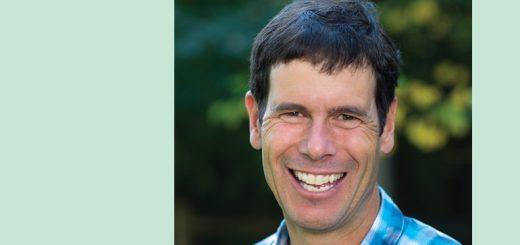
Sandy Compton. Courtesy photo.
The “road” from the claim boundary to the parking lot is — uhh — challenging. It hasn’t been maintained in any real way since Kennecott built exploration roads hither and yon below Cliff Lake to facilitate core drilling. (In fact, there are holes in the ground at the edge of the cliff holding up the lake.) In places, it’s necessary to crawl over boulders in low range and first gear. Still, the draw of the lake makes people willing to risk their oil pans and rocker panels.
Cliff Lake is a wild and beautiful place, though not so much as when I first visited 31 years ago. It has been “discovered,” and discovery is not always good for such a place. It’s thanks to road conditions, I suppose, that the place is still as “untouched” as it is, but its wildness is fraying at the edges.
Multiple campsites encircle the water, with more fire rings than necessary. Sometime since my last visit, someone has packed in a chainsaw (illegal in wilderness areas). Internal combustion machines and their users are hard to keep at bay, particularly when the U.S. Forest Service has no money to enforce wilderness regulations. (If Donnie Boy has his way and rescinds the Roadless Rule — something the leadership in mining and oil industries are drooling over — that will be a moot point.)
It appears the chain-sawyers only cut down dead trees, so that’s a plus.
There were six pickups at the trailhead when we walked out on Saturday, including Blue, the same Chevy that took me to the Cliff trailhead the first time. We met another rig coming up as we drove down, making a total of about two dozen folks in the lake vicinity. This may not seem like a lot, but the most I have seen at the lake at prior times was four beside myself and a friend or two. Most often, we’ve had the place to ourselves.
For more than 30 years, there has been an ongoing battle about mining the Rock Creek and Montanore claims, which would be carried on under the wilderness. The resistance is led by Cabinet Resource Group, Wild Montana and, particularly, the Rock Creek Alliance. There are concerns about the tailings pile (waste material from the mine); dewatering Rock Creek and even Cliff Lake itself; bull trout and grizzly bear habitat; and about subsidence, in which ground sinks into the space left by “room and pillar” mining.
The results of subsidence are already a concern on Mount Vernon above the closed Troy Mine. Hecla is charged with “reclamation” at Troy, but there is no reclaiming a surface that is sinking into the huge gaps left below. It’s not Hecla’s fault, but it’s also a distinct possibility at Rock Creek.
Across the Bull River from the Cabinet Mountains Wilderness are the Scotchman Peaks, a proposed wilderness. A bridge on the road to the trailhead for Little Spar Lake in the proposal washed out last winter, adding several miles to the hike. There is very little chance that the Forest Service will rebuild that bridge.
Maybe the missing bridge isn’t such a bad thing. There are no mining claims nearby, either. Wilderness is a precious and fragile thing, somewhat difficult to protect. Maybe we can use all the bad roads and missing bridges we can get.
For more info on protecting local wild country visit scotchmanpeaks.org, wildmontana.org, cabinetresourcegroup.org, rockcreekalliance.org, cubeironcataractcoalition.wordpress.com and idahoconservation.org.
Want to support independent local journalism?
The Sandpoint Reader is our town's local, independent weekly newspaper. "Independent" means that the Reader is locally owned and operated by people who were born and raised in Sandpoint. The Reader is owned by Publisher Ben Olson, Editor-in-Chief Zach Hagadone and Senior Writer Soncirey Mitchell. Sandpoint Reader LLC is a completely independent business unit; no big newspaper group or corporate conglomerate or billionaire owner dictates our editorial policy. And we want the news, opinion and lifestyle stories we report to be freely available to all interested readers - so unlike many other newspapers and media websites, we have NO PAYWALL on our website. The Reader relies wholly on the support of our valued advertisers, as well as readers who voluntarily contribute. Want to ensure that local, independent journalism survives in our town? You can help support the Reader for as little as $1.
TIMBER WARS: Six-part series, February-November 2022. GO READ IT»
WHERE ARE THE WORKERS?: Five-part series, September-October 2021. GO READ IT»
THE AMERICAN REDOUBT: Seven-part series, November-December 2017. GO READ IT»
STANDOFF AT RUBY RIDGE: 25 Years Later. Five-part series, August-September 2017. GO READ IT»
Curious about what media the locals use? Check our 2018 Local Media Survey. GO SEE »
Sandpoint in Pictures
Filmmaker Jimmy Matlosz of the Idaho Film Company has made a series of mini documentaries about influential Sandpoint locals, including the late Dann Hall and Erik Daarstad as well as icons Diane Michaels and Dan Shook. He is currently working on a series of interviews connected to the history of the Panida Theater. Jimmy is a 30-year veteran filmmaker who's work can be seen at dpmatlosz.com.
Meet the Reader
Ever wonder who makes the Reader happen? Here's a behind-the-scenes look pieced together by summer 2017 intern McCalee Cain in which Ben, Cameron and Lyndsie explain what exactly about the Reader keeps them coming back to their shabby (but well-loved) office each week.