Some of my fondest childhood memories involve hiking to pristine alpine destinations like Harrison Lake, catching cutthroat trout in a secret stream and seeing a rare mountain caribou in the Selkirk Crest. These were adventures I took for granted at the time.
During my high school senior year, I saw a map on the front page of the Coeur d’Alene Press and an article about a proposed policy to protect National Forest System “roadless areas.” Looking at the map, I realized these were the places where I went hiking, fishing and wildlife viewing. My neighbors hunted and dirt biked there. Roadless areas also provide valuable fish and wildlife habitat because they remain largely undeveloped.
The article announced a public meeting at the Idaho Panhandle National Forests supervisor’s office in Coeur d’Alene. Hundreds of similar meetings were being held nationwide to gather input on the Clinton administration’s proposal to protect about 58.5 million acres of roadless areas.
I attended that meeting — my first-ever public meeting. Maps covered the walls and Forest Service officials answered questions. You could submit a written comment, but I chose to record my verbal testimony on a cassette player. The USFS received roughly 1.6 million comments on the proposal, more than 90% of which supported it.
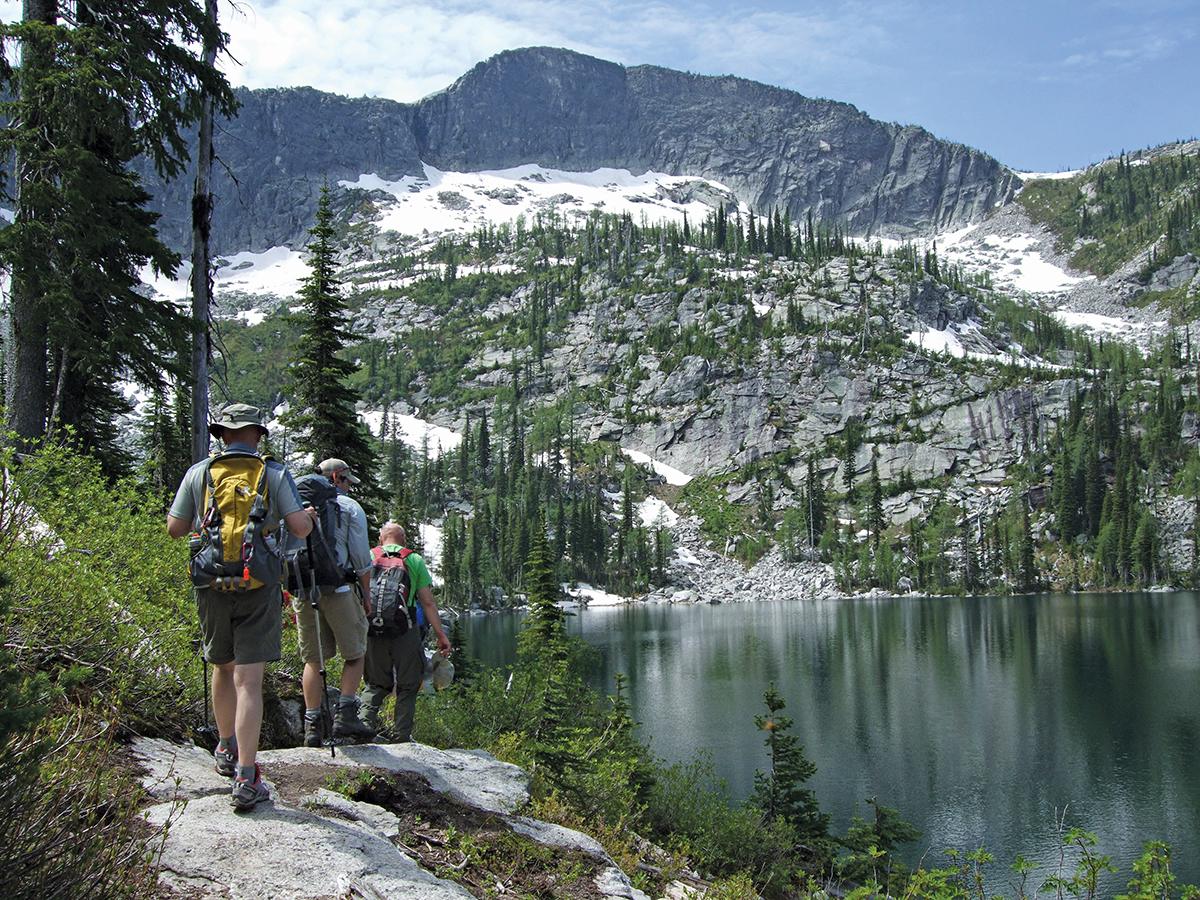
Hikers at Roman Nose Lakes. Photo courtesy of Idaho Conservation League.
Finalized in 2001, the National Roadless Area Conservation Rule restricted road construction and timber harvesting in roadless areas. It also restricted certain mineral activities. These protections helped preserve some of our nation’s largest remaining tracts of undeveloped land.
Fifty-eight million acres sounds like a lot, but it represents only about 30% of the National Forest System. All of the remaining acreage had been developed through road construction, logging, mining or other forms of development.
Idaho’s elected officials opposed the 2001 rule. In 2006, the state petitioned the federal government to adopt a different policy for Idaho’s roadless areas. By then, I was an intern at the Idaho Conservation League. I was assigned to draft comments about every Idaho roadless area in response to the state’s petition. ICL was concerned that Idaho was seeking to reopen the state’s remaining 9.3 million acres of roadless areas to development.
Public meetings gave Idahoans opportunities to weigh in. People in Bonners Ferry, Sandpoint, Coeur d’Alene and throughout the state supported protecting places where they hike, hunt, fish, pick huckleberries, camp and view the stars.
In 2008, an Idaho-specific policy was finalized. ICL ultimately supported the Idaho Roadless Rule, which established five management classifications. It provided stronger protections for some large, remote backcountry areas while allowing greater flexibility for activities such as reducing hazardous fuels near communities. The rule represented a compromise after years of public input and negotiations.
Recently, the Trump administration closed a public comment period on a proposal to repeal the 2001 national rule. More than 1 million submissions were received, and an analysis found that more than 99% opposed repeal.
The national and Idaho rules helped end the timber wars of the 1980s and ’90s. These policies gave people who care about undeveloped public lands some assurance that not every acre would be opened to roads and logging. Repealing the national rule could reignite those conflicts. Rather than eliminate national protections, the administration should consider state-specific proposals that maintain meaningful safeguards while addressing legitimate local concerns.
Although the administration has not proposed repealing Idaho’s rule, recent developments show why Idahoans should pay attention. On Sept. 29, Idaho County notified Gov. Brad Little that it intends to seek changes to the management classifications of the 1.7 million acres of Idaho Roadless Areas within its borders. The county wants those lands moved into the Idaho rule’s least restrictive category: General Forest. It has asked Little for assistance and plans to submit a formal request to the USFS, while encouraging other counties to join its effort.
Changing these classifications would not eliminate roadless status, but could reduce existing safeguards and allow more road construction and timber harvesting in sensitive areas. Both roadless rules already allow certain hazardous-fuel treatments, so the rationale for seeking broader changes deserves scrutiny.
If you hike, hunt, fish, camp, or ride a mountain bike or motorcycle in our national forests, you should care about roadless areas. Even if you don’t participate in these activities, you should care if you value fish and wildlife, old-growth forests, clean water or the opportunity for future generations to experience wild places.
Brad Smith is the interim executive director of the Idaho Conservation League. He lives and works in Sandpoint and prizes National Forest System roadless areas for their recreation opportunities, fish and wildlife habitat, and clean water.
Want to support independent local journalism?
The Sandpoint Reader is our town's local, independent weekly newspaper. "Independent" means that the Reader is locally owned and operated by people who were born and raised in Sandpoint. The Reader is owned by Publisher Ben Olson, Editor-in-Chief Zach Hagadone and Senior Writer Soncirey Mitchell. Sandpoint Reader LLC is a completely independent business unit; no big newspaper group or corporate conglomerate or billionaire owner dictates our editorial policy. And we want the news, opinion and lifestyle stories we report to be freely available to all interested readers - so unlike many other newspapers and media websites, we have NO PAYWALL on our website. The Reader relies wholly on the support of our valued advertisers, as well as readers who voluntarily contribute. Want to ensure that local, independent journalism survives in our town? You can help support the Reader for as little as $1.
TIMBER WARS: Six-part series, February-November 2022. GO READ IT»
WHERE ARE THE WORKERS?: Five-part series, September-October 2021. GO READ IT»
THE AMERICAN REDOUBT: Seven-part series, November-December 2017. GO READ IT»
STANDOFF AT RUBY RIDGE: 25 Years Later. Five-part series, August-September 2017. GO READ IT»
Curious about what media the locals use? Check our 2018 Local Media Survey. GO SEE »
Sandpoint in Pictures
Filmmaker Jimmy Matlosz of the Idaho Film Company has made a series of mini documentaries about influential Sandpoint locals, including the late Dann Hall and Erik Daarstad as well as icons Diane Michaels and Dan Shook. He is currently working on a series of interviews connected to the history of the Panida Theater. Jimmy is a 30-year veteran filmmaker who's work can be seen at dpmatlosz.com.
Meet the Reader
Ever wonder who makes the Reader happen? Here's a behind-the-scenes look pieced together by summer 2017 intern McCalee Cain in which Ben, Cameron and Lyndsie explain what exactly about the Reader keeps them coming back to their shabby (but well-loved) office each week.