‘My life was in freefall before I qualified for Medicaid’
September 10, 2025
Program cuts will cost more than supposed savings
By Karen Perkins Robles Reader Contributor
I am a survivor of childhood abuse, domestic violence and violent crime. I live with complex post-traumatic stress disorder and bipolar disorder — conditions I did not choose, but ones I must manage every day. Without Medicaid, I would not be here to share my story.
That’s why I feel compelled to speak up about the consequences of H.R. 1, the federal budget law recently passed by Congress. I am very worried that the legislation’s massive budget cuts to Medicaid and strict work requirements will put thousands of lives at risk.
My life was in freefall before I qualified for Medicaid. I attempted suicide multiple times. I would self-harm to relieve intense emotions. I couldn’t complete basic tasks. I had no support and no hope. My turning point came when a college professor — a retired sheriff and Iraq War veteran — told me I needed mental health treatment. He shared his battle with PTSD and assured me that recovery was possible. For the first time, I knew I wasn’t alone.
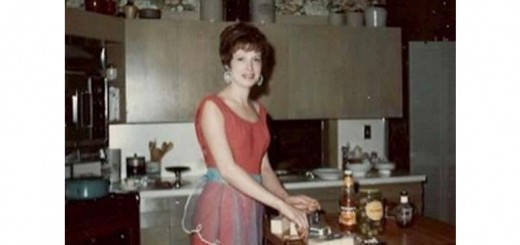
Karley Perkins Robles. Courtesy photo
Through Medicaid, I received case management, therapy and psychiatric care. My case managers helped me schedule appointments and get transportation to access care. They connected me to vocational rehabilitation and, eventually, I was able to manage my own affairs. I stabilized.
But recovery is not linear. I lost my Medicaid benefits many times because of missed paperwork. I would end up in the ER when I needed medical attention — health care that I couldn’t afford to pay for because I was uninsured. Last year, my symptoms returned: panic attacks, dissociation, even stuttering. I struggled to manage the overwhelming paperwork to stay enrolled. The only reason I was able to keep my Medicaid coverage was because my case managers showed me how to request an exemption.
Many people with untreated mental health conditions often don’t realize that treatment is available or how to access it. Medicaid makes this possible.
There are more people with stories like mine, but they won’t have the lifeline I had with Medicaid because of this law. More bureaucratic hurdles will be imposed through work requirements that will cut people off from health care while doing nothing to help them find work. For people like me, who live with mental health challenges that make navigating complex systems nearly impossible, these policies are not just burdensome — they are devastating.
Stripping Medicaid away will push thousands of people into crisis. The costs — in ER visits, hospitalizations, lost productivity and lives — will be far greater than any so-called savings.
Congress made a choice: It chose to make it harder for vulnerable Americans to get care. I am living proof of what Medicaid makes possible — and I fear for those who will not get that same chance.
Karey Perkins Robles, from Emmett, Idaho, is an advocate with a special focus on behavioral health, strengthening families and Head Start. She works to elevate the voices of experts and advance policies that address socioeconomic challenges, so communities have the support they need to thrive.
Want to support independent local journalism?
The Sandpoint Reader is our town's local, independent weekly newspaper. "Independent" means that the Reader is locally owned and operated by people who were born and raised in Sandpoint. The Reader is owned by Publisher Ben Olson, Editor-in-Chief Zach Hagadone and Senior Writer Soncirey Mitchell. Sandpoint Reader LLC is a completely independent business unit; no big newspaper group or corporate conglomerate or billionaire owner dictates our editorial policy. And we want the news, opinion and lifestyle stories we report to be freely available to all interested readers - so unlike many other newspapers and media websites, we have NO PAYWALL on our website. The Reader relies wholly on the support of our valued advertisers, as well as readers who voluntarily contribute. Want to ensure that local, independent journalism survives in our town? You can help support the Reader for as little as $1.
TIMBER WARS: Six-part series, February-November 2022. GO READ IT»
WHERE ARE THE WORKERS?: Five-part series, September-October 2021. GO READ IT»
THE AMERICAN REDOUBT: Seven-part series, November-December 2017. GO READ IT»
STANDOFF AT RUBY RIDGE: 25 Years Later. Five-part series, August-September 2017. GO READ IT»
Curious about what media the locals use? Check our 2018 Local Media Survey. GO SEE »
Sandpoint in Pictures
Filmmaker Jimmy Matlosz of the Idaho Film Company has made a series of mini documentaries about influential Sandpoint locals, including the late Dann Hall and Erik Daarstad as well as icons Diane Michaels and Dan Shook. He is currently working on a series of interviews connected to the history of the Panida Theater. Jimmy is a 30-year veteran filmmaker who's work can be seen at dpmatlosz.com.
Meet the Reader
Ever wonder who makes the Reader happen? Here's a behind-the-scenes look pieced together by summer 2017 intern McCalee Cain in which Ben, Cameron and Lyndsie explain what exactly about the Reader keeps them coming back to their shabby (but well-loved) office each week.