We’ve spent October exploring all sorts of unexplained mysteries; and, as Halloween descends upon us, we look at our final batch — the oddest and most intriguing unexplained mysteries I’ve run across.
Mary Celeste: ‘The Ghost Ship’
On Tuesday, Nov. 5, 1872, the cargo brigantine Mary Celeste departed from Staten Island, N.Y., bound with a crew of 10 for a transatlantic voyage to Portugal. It would be the last time these people were ever seen.
On Dec. 4, the ship was spotted by another merchant vessel that had left America at roughly the same time, the Dei Gratia. The Dei Gratia’s crew noticed the Mary Celeste moving erratically at sea with an unusual rigging configuration. They attempted to signal the ship, but to no avail. The decision was made to approach the vessel, and to the surprise of the Dei Gratia’s captain, David Morehouse, the ship was completely abandoned — though it had been rigged to continue sailing.
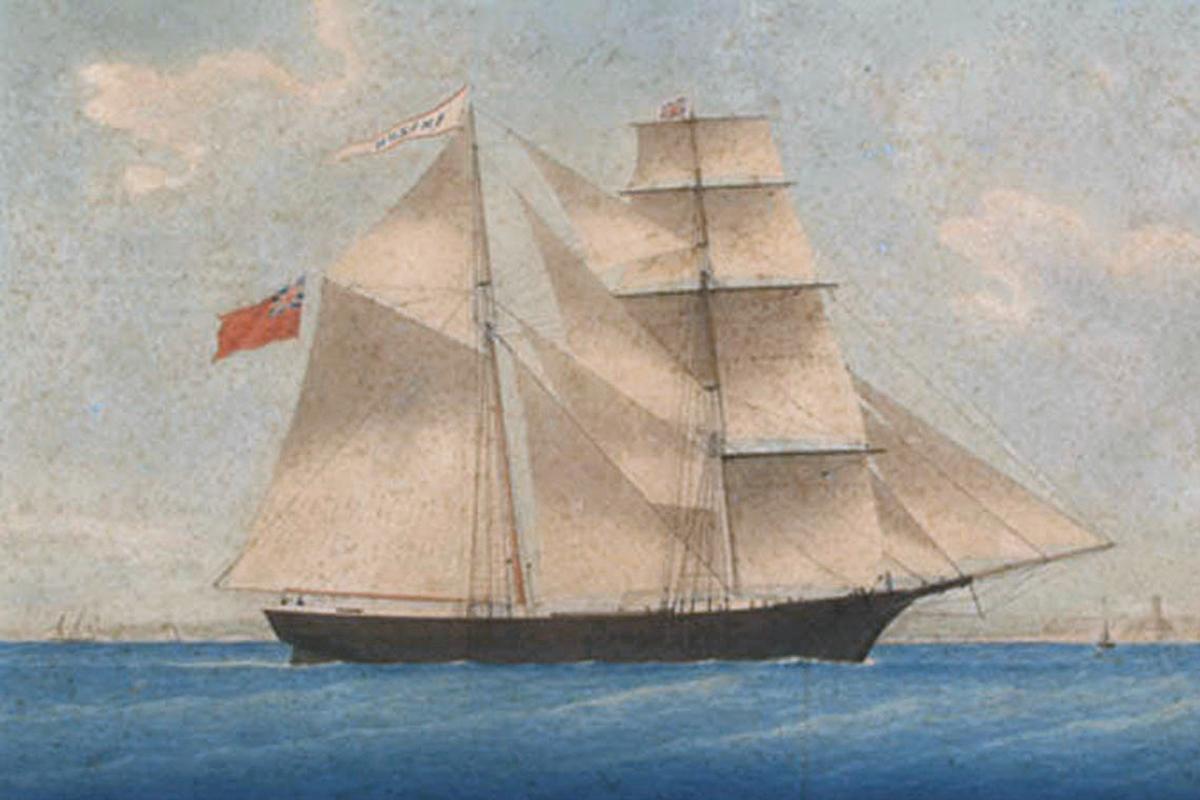
An 1861 painting of the Mary Celeste when it was still named the Amazon. Courtesy image
The Mary Celeste had taken on about three and a half feet of water — which wasn’t unusual for a vessel of its size — and the crew had created a makeshift sounding rod to measure its depth. The ship’s cargo of alcohol was virtually untouched and there were no signs of violence. The single lifeboat was missing and presumably launched. Crew logs remained on the ship with no indication of what may have happened.
It’s reasonable to assume that the crew abandoned ship, but it’s unclear why. Even if the Mary Celeste was taking on water, the crew would have known that roping their lifeboat to the ship would have given them much better chances of survival than abandoning it entirely.
It’s possible that the crew thought the flammable cargo was compromised and sought to get as far away from it as they could, which might explain why it was still rigged to sail — even so, a sufficient length of rope would have been a literal lifeline that would have kept them much safer.
Instead, the crew simply vanished. No lifeboat or remains were ever found. Nobody outside of that lifeboat knows what happened to the crew of the Mary Celeste.
Several years later, the vessel’s new owner intentionally wrecked the ship on the coast of Haiti in an effort to commit insurance fraud.
‘The Shark Arm Murders’
In April 1935, a tiger shark was taken from Coogee Beach in Sydney, Australia, and placed in a large display tank. After a few days, the shark fell ill and vomited. The shark vomited up another, smaller shark, and from that smaller shark came a well-preserved human arm with a distinctive tattoo. Upon retrieving the arm, it was discovered that it had been cleanly amputated by a knife and not by shark teeth, thus triggering an investigation.
Recognizing the tattoo, family members identified the arm as having belonged to former-boxer and saloon owner, Jimmy Smith. Smith was also a police informant reporting against a local collective of thugs and gangsters.
The investigation hit a number of frustrating roadblocks, including the destruction of the shark by aquarium owners. Despite the first of these hurdles, investigators followed the money to a local business owner, Reginald William Lloyd Holmes, who had been employing Smith to defraud insurance companies. It came to light that Smith had been blackmailing Holmes, likely leading to his murder — though police still lacked adequate evidence to move.
A mutual acquaintance of the men and another active criminal, Patrick Francis Brady, then drew police attention. Brady was a forger and would regularly fabricate the checks of people frequenting Holmes’ business, which Holmes and Smith would cash to rob their customers and associates.
After deducing that Brady was likely the last person to see Smith alive, and after unearthing his connection to Holmes, police decided to arrest and interrogate Holmes. Rather than face the authorities, Holmes attempted suicide with a pistol but he botched it, fell unconscious, was revived, escaped via speedboat and eventually apprehended by Sydney authorities.
Holmes decided to cooperate with police and pinned the murder on Brady, while also claiming that Brady had shown Holmes the severed arm and threatened to kill and dismember him, too, if he didn’t provide £500. After interrogation, Holmes returned home to his wife, collected some money and said he had to run an errand.
The next morning, he was found dead in his car with three gunshot wounds to the chest. Brady was charged with the murder, but his lawyer argued that there was insufficient evidence — specifically, that there was nothing linking him to the murder of Holmes and that Smith could very well still be alive, just missing one arm. Brady was acquitted, and the murder remains unsolved.
It was likely that this was part of a much larger organized crime ring, and that Smith had been exposed as a police informant, which Holmes likely had been aware of. Brady was almost certainly the culprit behind both murders, though the orders to do so had probably come from another party involved in the racket. However, it was never officially solved, so there’s no real way to be sure since everyone involved is long dead.
Concluding our final entry in October’s unexplained mysteries series, we will return to your regularly scheduled “Mad About Science” shenanigans next week.
Stay curious, 7B.
Want to support independent local journalism?
The Sandpoint Reader is our town's local, independent weekly newspaper. "Independent" means that the Reader is locally owned and operated by people who were born and raised in Sandpoint. The Reader is owned by Publisher Ben Olson, Editor-in-Chief Zach Hagadone and Senior Writer Soncirey Mitchell. Sandpoint Reader LLC is a completely independent business unit; no big newspaper group or corporate conglomerate or billionaire owner dictates our editorial policy. And we want the news, opinion and lifestyle stories we report to be freely available to all interested readers - so unlike many other newspapers and media websites, we have NO PAYWALL on our website. The Reader relies wholly on the support of our valued advertisers, as well as readers who voluntarily contribute. Want to ensure that local, independent journalism survives in our town? You can help support the Reader for as little as $1.
TIMBER WARS: Six-part series, February-November 2022. GO READ IT»
WHERE ARE THE WORKERS?: Five-part series, September-October 2021. GO READ IT»
THE AMERICAN REDOUBT: Seven-part series, November-December 2017. GO READ IT»
STANDOFF AT RUBY RIDGE: 25 Years Later. Five-part series, August-September 2017. GO READ IT»
Curious about what media the locals use? Check our 2018 Local Media Survey. GO SEE »
Sandpoint in Pictures
Filmmaker Jimmy Matlosz of the Idaho Film Company has made a series of mini documentaries about influential Sandpoint locals, including the late Dann Hall and Erik Daarstad as well as icons Diane Michaels and Dan Shook. He is currently working on a series of interviews connected to the history of the Panida Theater. Jimmy is a 30-year veteran filmmaker who's work can be seen at dpmatlosz.com.
Meet the Reader
Ever wonder who makes the Reader happen? Here's a behind-the-scenes look pieced together by summer 2017 intern McCalee Cain in which Ben, Cameron and Lyndsie explain what exactly about the Reader keeps them coming back to their shabby (but well-loved) office each week.