Viruses are really strange things. We can’t say for sure whether they are actually alive, because defining life is an inherently difficult thing to do. We largely consider cells and cellular organisms to be alive, but many scientists don’t consider viruses to be living entities.
Viruses do act to reproduce, infecting cells and converting them into a biological factory to replicate and spread themselves. If they aren’t alive or driven by any fundamental desire to do anything but replicate, they could be seen as something adjacent to being alive. Kind of like a computer program, they’re loaded with a set of instructions inherited from more than 4 billion years of evolution, and, upon reaching the proper parameters, will execute their program.
A virus is largely a collection of genetic data and proteins. A virion will interact with a cell — often a specific kind of cell the virion has evolved to infect — and either attach to or enter the cell membrane. At this point, the virus injects its genetic information, which overrides the cell’s and instructs it to utilize its own resources to create new viruses. Once the cell has reached its capacity, it will break apart and cause the newly formed virus particles to scatter and attempt to begin the cycle again with a new, healthy cell.
A single virion really isn’t likely to lead to a debilitating full-body infection. Often, a major infection of the cold, flu or COVID requires thousands upon thousands of viral particles to reach a level where it temporarily overwhelms the host’s immune system. Unfortunately for us, viruses are well adapted to creating chains of mass production and a single sneeze may carry a viral load with thousands of individual particles ready to party in a fresh host.
Viruses get a really bad rap, but not all of them are boogeymen. Even ones that have affected us adversely in the past may not even be that bad. Humans have a complex and adaptive microbiome.
The bacteria that exist everywhere in our body actually have specific functions they execute in our service, but they have to be kept in check.
Our bodies can’t produce enough immune cells to police the 40 trillion bacteria we carry, so we have to make some strange compromises. Left unchecked, the bacteria inside of us would simply replicate out of control and lead to a horrendous uprising that would completely debilitate us. This is effectively what sepsis is — our bodies become seriously compromised and trigger a scorched-earth immune response from which it may not be able to recover.
Instead, under normal circumstances, our immune system lets another predator take over to keep bacteria in check: viruses.
Up to 10 trillion viruses are present in our body at any given moment, and they exist exclusively to replicate and effectively keep bacteria numbers manageable. This is our virome.
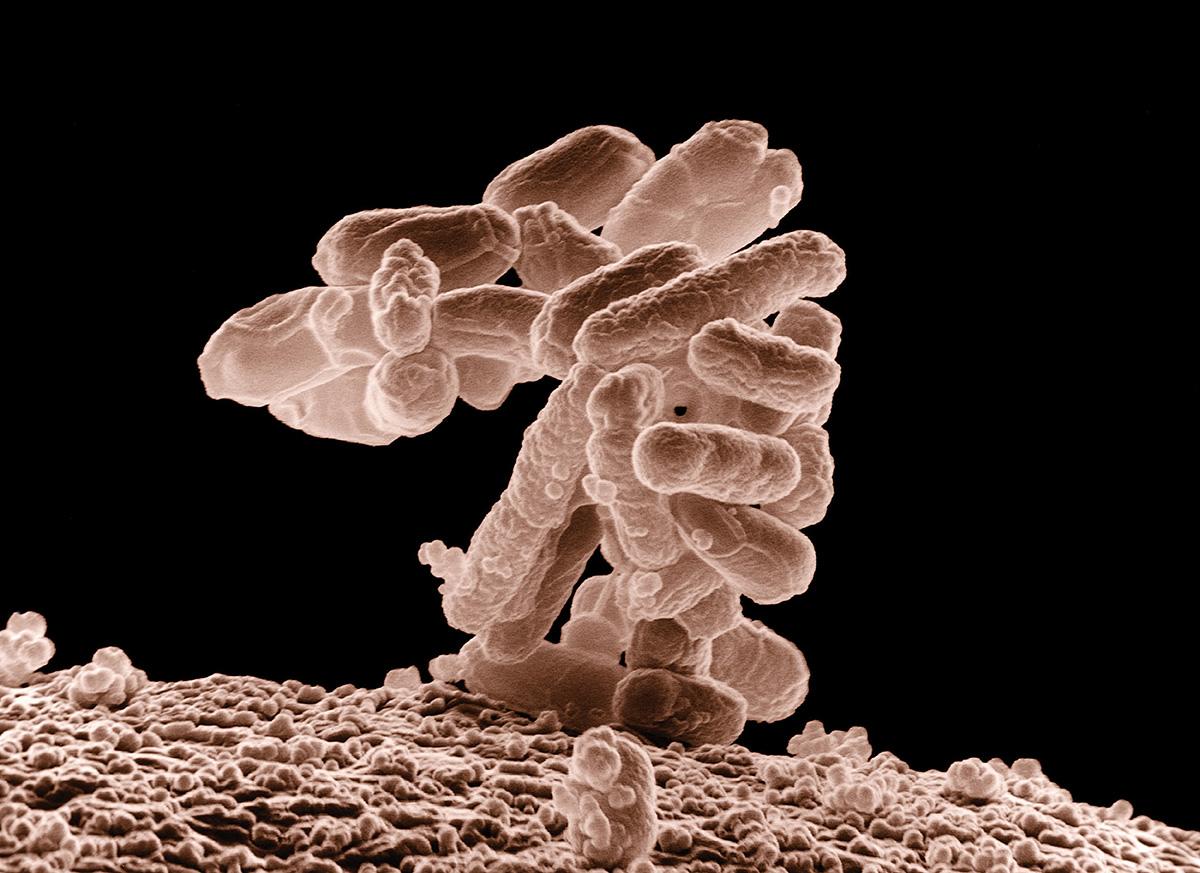
Lambdavirus is a form of bacteriophage, or bacteria killer. It exists within our intestinal tracts, just drifting around until it interacts with the Escherichia coli bacteria. The virus latches on, injects E. coli with its genetic material and converts it into a virus factory, eventually blasting it open and infecting other bacteria around it. Some E. coli may survive the attack or repel the Lambdavirus, then pass those adaptations on to its divisions in an billions-year-old arms race.
Not all viruses are bacteria killers. Ultimately, in order to keep on doing what a virus does, it needs its host to be healthy. Some viruses will alter the DNA of beneficial bacteria in your body to help you process nutrients and complex carbohydrates more efficiently in a bid to improve your overall health and create more favorable conditions in which the virus and the cells it interacts with can “live.”
This can also go the complete opposite direction, as is the case with CTXφ bacteriophage. This virus infects the Vibrio cholerae found in aquatic environments. While normally mostly harmless, once this bacteria has been infected by the virus, it begins to produce cholera toxins that are deadly to humans. Rapid reproduction of the bacteria then wreaks havoc on an infected body.
As random as this is, we may be on the path to figuring out how to use these viruses to help us stay healthy in a very unexpected way. Viruses can infect cells that bacteria and immune cells ignore. Cancer cells are effectively our own cells that have mutated in a way that isn’t conducive to our body’s primary functions. Rampant growth of cancer cells can overtake healthy organ cells, block blood flow in areas and consume resources the rest of our body needs to survive, ultimately leading to pain and death. Since they’re still our cells, and having sometimes created a protective barrier to repel our immune cells, cancer becomes very difficult to treat.
Some viruses may be the answer, being capable of infecting cancer cells and flagging them as a threat to our immune system. These are called oncolytic viruses. There have been clinical trials to learn more about how these viruses work and how they can help treat cancer alongside chemotherapy and radiation treatments.
I could have done without COVID, but it’s nice to know that some viruses out there have my back.
Stay curious, 7B.
Want to support independent local journalism?
The Sandpoint Reader is our town's local, independent weekly newspaper. "Independent" means that the Reader is locally owned and operated by people who were born and raised in Sandpoint. The Reader is owned by Publisher Ben Olson, Editor-in-Chief Zach Hagadone and Senior Writer Soncirey Mitchell. Sandpoint Reader LLC is a completely independent business unit; no big newspaper group or corporate conglomerate or billionaire owner dictates our editorial policy. And we want the news, opinion and lifestyle stories we report to be freely available to all interested readers - so unlike many other newspapers and media websites, we have NO PAYWALL on our website. The Reader relies wholly on the support of our valued advertisers, as well as readers who voluntarily contribute. Want to ensure that local, independent journalism survives in our town? You can help support the Reader for as little as $1.
TIMBER WARS: Six-part series, February-November 2022. GO READ IT»
WHERE ARE THE WORKERS?: Five-part series, September-October 2021. GO READ IT»
THE AMERICAN REDOUBT: Seven-part series, November-December 2017. GO READ IT»
STANDOFF AT RUBY RIDGE: 25 Years Later. Five-part series, August-September 2017. GO READ IT»
Curious about what media the locals use? Check our 2018 Local Media Survey. GO SEE »
Sandpoint in Pictures
Filmmaker Jimmy Matlosz of the Idaho Film Company has made a series of mini documentaries about influential Sandpoint locals, including the late Dann Hall and Erik Daarstad as well as icons Diane Michaels and Dan Shook. He is currently working on a series of interviews connected to the history of the Panida Theater. Jimmy is a 30-year veteran filmmaker who's work can be seen at dpmatlosz.com.
Meet the Reader
Ever wonder who makes the Reader happen? Here's a behind-the-scenes look pieced together by summer 2017 intern McCalee Cain in which Ben, Cameron and Lyndsie explain what exactly about the Reader keeps them coming back to their shabby (but well-loved) office each week.