We continue through October with another instance of unsolved mysteries. This is a story with twists and turns, and the potential of a massive government cover-up happening right in the Pacific Northwest.
It could also be a big fat nothing burger, but it’s a lot of fun to speculate and explore.
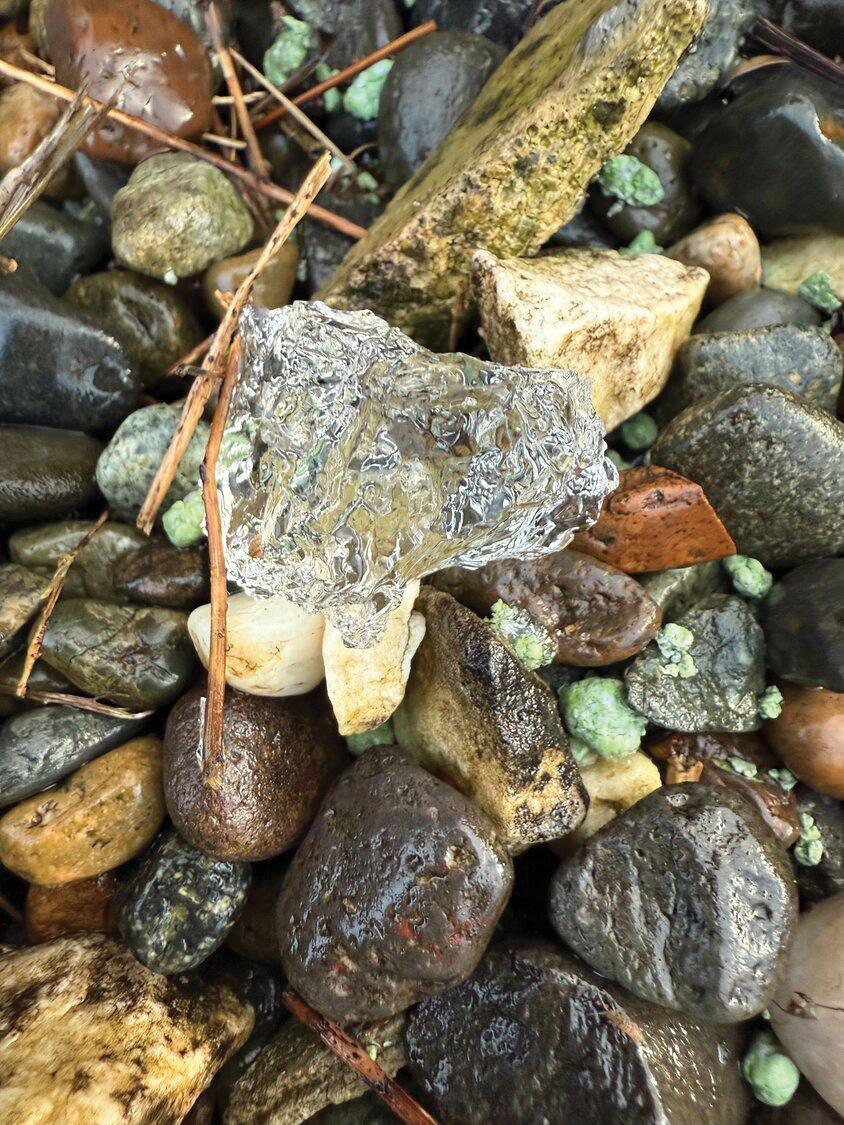
On Aug. 7, 1994, it was raining in Oakville, Wash. This was no ordinary rain, however. Residents of Oakville reported strange rice-sized globs of gelatinous goo covering everything touched by the rain. Officer David Lacey recalled the blob rain sticking to his windshield and the windshield wipers of his patrol car just smudged and made visibility virtually nonexistent.
Other residents reported animals that consumed the jelly became sick and died. Residents fell ill, suspecting the mysterious blobs but unable to confirm.
Resident Dotty Hearn as well as Lacey became violently ill and were hospitalized for three days after the event. Suspecting a correlation between the mysterious blobs and unexpected illness, residents sent samples to the Washington Department of Ecology and the Washington Department of Health, respectively. Both agencies returned conflicting results, with one saying it was of inorganic nature and the other saying it was organic. The samples disappeared and no official record remains of them. One interesting shared fact was that the samples appeared to have a cell-like structure yet were devoid of cell nuclei, which ruled out the potential of clusters of human white blood cells that had been speculated at one point.
A photo of gelatinous blobs taken by Alli McCrite
One hypothesis was that these were the remains of jellyfish that had been vaporized by military bombing runs off the Washington coast, but the lack of cell nuclei seemed to have disputed this. Additionally, the phenomenon was one of the only instances of this occurring, despite the presence of military drills continuing both off the coast and elsewhere without replicating the events of Aug. 7, 1994.
Another proposed hypothesis was star jelly, which is a strange, gelatinous substance that seems to appear on grass, trees and other flora after a meteor shower. This is a very broad-reaching explanation for localized events, however, as “star jelly” has been proven to be a massive number of different things. Frogs eaten and regurgitated by predators will sometimes leave a slimy mass of eggs and goo behind with no other obvious sign of their having been there. During the spring, hundreds of thousands of frogs may appear and breed near water sources and provide a prime buffet for predators.
Cyanobacteria can create a gelatinous sheath that swells up after rainfall, creating gooey spheroids that seem to have fallen from the sky. Additionally, multitudes of fungi will appear like carpets of slime or goo during fructification — a process by which fungi is growing to form a hard body. This can also appear to grow and swell during bouts of high precipitation.
Though not well understood in 1927 when it was written, it was likely that the occurrence of star jelly played some part in the inspiration for H.P. Lovecraft’s short story, The Colour Out of Space, in which a meteorite impacts a farm near Arkham, Mass., and a strange, gooey, alien-like creature poisons the countryside and drives people into complete madness.
Interestingly, much of this story was tied to Lovecraft’s fascination with colors that humans are unable to see, but there are certainly elements of star jelly folklore encapsulated within the pages of the story.
The mysterious blobs made their return in Rochester, Wash., 31 years after the original event in Oakville, which is just eight miles away. In April 2025, large translucent blobs appeared during the rain. Intrigued, residents of Rochester collected samples and submitted them for private testing. The answer wasn’t nearly as intriguing or mysterious as one would hope.
The blobs in 2025 were polyacrylamide, or PAM, a chemical substance that is used for a huge range of applications. PAM is used in water treatment plants for flocculation. My new favorite word, “flocculation” is the process in which a chemical agent separates colloidal elements from liquid to form sedimentary floc.
Essentially, if there are things in your water you want to separate to be able to use the water again, you would use polyacrylamide to do it.
PAM’s reaction to swell in the presence of water also makes it an effective chemical for soil aeration and erosion control. It is commonly used in specialty planting mixes to reduce soil compaction when performing small-scale gardening and planting.
The most identifiable use for polyacrylamide is for the Gro-Beast toys of the 1990s. They were spongy little guys in the shape of dinosaurs or monsters; and, once you poured water over them, they would swell tremendously in size. These toys are nostalgic for me, and I’m delighted to know how they were made.
While the blobs of Oakville may have been identified as polyacrylamide, the original samples are all gone, so there’s no definitive proof that this was the case. It’s still curious that so many people became so violently ill from exposure, when polyacrylamide is inert. Its precursor, acrylamide, is a potent neurotoxin and carcinogen, but it isn’t known to be able to break back down into its precursor chemical.
Even more perplexing, how did so much of it appear in Oakville? Where did it come from, and did it really rain from the sky or was it already dispersed throughout the community and simply activated by the rain?
It remains an unsolved mystery to this day.
Stay curious, 7B.
Want to support independent local journalism?
The Sandpoint Reader is our town's local, independent weekly newspaper. "Independent" means that the Reader is locally owned and operated by people who were born and raised in Sandpoint. The Reader is owned by Publisher Ben Olson, Editor-in-Chief Zach Hagadone and Senior Writer Soncirey Mitchell. Sandpoint Reader LLC is a completely independent business unit; no big newspaper group or corporate conglomerate or billionaire owner dictates our editorial policy. And we want the news, opinion and lifestyle stories we report to be freely available to all interested readers - so unlike many other newspapers and media websites, we have NO PAYWALL on our website. The Reader relies wholly on the support of our valued advertisers, as well as readers who voluntarily contribute. Want to ensure that local, independent journalism survives in our town? You can help support the Reader for as little as $1.
TIMBER WARS: Six-part series, February-November 2022. GO READ IT»
WHERE ARE THE WORKERS?: Five-part series, September-October 2021. GO READ IT»
THE AMERICAN REDOUBT: Seven-part series, November-December 2017. GO READ IT»
STANDOFF AT RUBY RIDGE: 25 Years Later. Five-part series, August-September 2017. GO READ IT»
Curious about what media the locals use? Check our 2018 Local Media Survey. GO SEE »
Sandpoint in Pictures
Filmmaker Jimmy Matlosz of the Idaho Film Company has made a series of mini documentaries about influential Sandpoint locals, including the late Dann Hall and Erik Daarstad as well as icons Diane Michaels and Dan Shook. He is currently working on a series of interviews connected to the history of the Panida Theater. Jimmy is a 30-year veteran filmmaker who's work can be seen at dpmatlosz.com.
Meet the Reader
Ever wonder who makes the Reader happen? Here's a behind-the-scenes look pieced together by summer 2017 intern McCalee Cain in which Ben, Cameron and Lyndsie explain what exactly about the Reader keeps them coming back to their shabby (but well-loved) office each week.