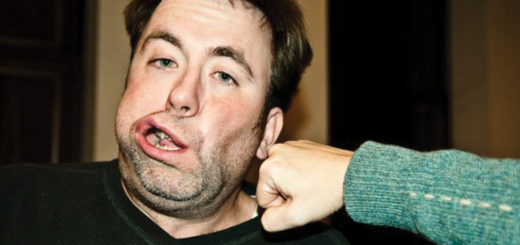
Human health is a complicated thing prone to massive amounts of misinformation. We’re learning something new about our bodies every day. Even established facts about our health can be altered by our environment.
But what about the familiar adages told to us by our parents about our health? How many are true and how many are completely wrong?
“Don’t go outside with a wet head, or you’ll catch a cold!”
This is a tricky one. Going outside with a wet head isn’t what will make you sick, but it has the potential to contribute to it. Colds are caused by viruses, but viruses aren’t attracted by wet hair. Viruses are on every surface, just like bacteria, but our body’s immune system is very good at fighting them off before they become a problem — most of the time.
Being physically chilly contributes to catching illness because your body is expending more energy to stay warm, which can hamper your immune response. Essentially, your body is choosing to survive rather than thrive, because it isn’t sure how long the cold temperatures will last. However, it requires sustained exposure to cold to really begin taking a toll on your body. Going outside on a fall day with a wet head isn’t remotely comparable to walking around in the depths of winter fully dry. If you were to go for a polar plunge once a week and sit outside afterward for a few hours, your immune system would likely be compromised, but then you’ve got much bigger problems to worry about.
Hypothermia, especially repeated exposure, would start to do some serious damage to your body. Hypothermic exposure damages your cognitive function, kidneys and liver. It can also cause cardiac arrhythmia. So don’t fret a wet head, but maybe don’t needlessly expose yourself to hypothermic chills on a regular basis.
“Cracking your knuckles will give you arthritis!”
This one is just a flat out lie. There is no scientific evidence that cracking your knuckles will give or even contribute to arthritis over any period of time.
Dissolved gases such as carbon dioxide build up within your body, particularly in the synovial fluid that acts as lubricant between your joints. When you crack your knuckles, it creates negative space and causes the bubbles to collapse and create that familiar cracking or popping sound. This is not the sound of your bones and is exclusively the sound of gas bubbles bursting. It takes about 20 minutes for the gas to reabsorb in the synovial fluid, which is why you can’t rapid-fire crack your knuckles.
Arthritis is actually several conditions that affect the joints of the human body. Logically, you’d think that doing something to stress your joints would contribute to arthritis — and in most cases you’d be right — but cracking the gas out of your knuckles doesn’t seem to be one of those causes.
The most common forms of arthritis are osteoarthritis, rheumatoid arthritis and psoriatic arthritis. Osteoarthritis occurs through wear and tear of the cartilage between your joints and can manifest in pain when the bones rub against one another. This has very little to do with the synovial fluid or the glands that produce it, and more to do with repeated use of these joints over a long period of time. You’re more likely to get osteoarthritis from working and performing repetitive motions throughout your life than cracking your knuckles.
Rheumatoid arthritis is an autoimmune disease by which your white blood cells attack the tissue holding your joints together. Cracking your knuckles has nothing to do with this immune response but may be uncomfortable if you already suffer from rheumatoid arthritis. Psoriatic arthritis comes from the skin condition known as psoriasis, commonly seen on TV in the form of pharmaceutical ads where people are happily dancing while a narrator lists horrendous side effects for minutes on end.
In actuality, knuckle cracking is completely benign. It’s neither positive nor negative, and likely serves more of a psychological relief than any physical one. However, it’s worth noting that obsessively or forcefully cracking your knuckles to the point of causing swelling can be harmful and carries the potential to damage ligaments and tissue along the finger or wrist. If you find yourself pushing knuckle cracking to this extreme, there are likely stressors in your life causing this behavior.
The loud pop you may hear from your knees or hips when crouching is often the same process as cracking your knuckles, just with a larger amount of gas involved. However, there are larger structures in your knees that may also be making this sound such as tendons shifting or cartilage rubbing against other cartilage. If pain or discomfort is involved, it’s time to talk to a doctor, because that’s something more than harmless gas building up.
Stay curious, 7B.
Thanks for the topic suggestion, Molly!
Want to support independent local journalism?
The Sandpoint Reader is our town's local, independent weekly newspaper. "Independent" means that the Reader is locally owned and operated by people who were born and raised in Sandpoint. The Reader is owned by Publisher Ben Olson, Editor-in-Chief Zach Hagadone and Senior Writer Soncirey Mitchell. Sandpoint Reader LLC is a completely independent business unit; no big newspaper group or corporate conglomerate or billionaire owner dictates our editorial policy. And we want the news, opinion and lifestyle stories we report to be freely available to all interested readers - so unlike many other newspapers and media websites, we have NO PAYWALL on our website. The Reader relies wholly on the support of our valued advertisers, as well as readers who voluntarily contribute. Want to ensure that local, independent journalism survives in our town? You can help support the Reader for as little as $1.
TIMBER WARS: Six-part series, February-November 2022. GO READ IT»
WHERE ARE THE WORKERS?: Five-part series, September-October 2021. GO READ IT»
THE AMERICAN REDOUBT: Seven-part series, November-December 2017. GO READ IT»
STANDOFF AT RUBY RIDGE: 25 Years Later. Five-part series, August-September 2017. GO READ IT»
Curious about what media the locals use? Check our 2018 Local Media Survey. GO SEE »
Sandpoint in Pictures
Filmmaker Jimmy Matlosz of the Idaho Film Company has made a series of mini documentaries about influential Sandpoint locals, including the late Dann Hall and Erik Daarstad as well as icons Diane Michaels and Dan Shook. He is currently working on a series of interviews connected to the history of the Panida Theater. Jimmy is a 30-year veteran filmmaker who's work can be seen at dpmatlosz.com.
Meet the Reader
Ever wonder who makes the Reader happen? Here's a behind-the-scenes look pieced together by summer 2017 intern McCalee Cain in which Ben, Cameron and Lyndsie explain what exactly about the Reader keeps them coming back to their shabby (but well-loved) office each week.