The New Yorker carried an interesting piece on its website Dec. 2 titled “Now Watch Me Read,” in which Brady Brickner-Wood explores the idea of “performative reading.” That is, the vibes — real or perceived — that are put off by people who show up in a public place like a bar or coffee shop, crack open a hefty tome and start flipping the pages.
Apparently, this activity unsettles a lot of people, who feel like anyone who dares consume a physical book outside their private space is somehow showing off, lamely attempting to attract a mate or otherwise insulting everyone else by not scrolling through their phone like everyone else.
Of course, no one can know the motivations for someone bringing a book to the bar, but that doesn’t matter. According to Brickner-Wood, the root reaction among the anti-performative readers is that performative readers are “pretentious” in a variety of ways and, therefore, commit the sin of inauthenticity. Who do they think they are, the critics argue, to think they’re impressing anyone by ruminating over Moby Dick instead of binging on TikTok or Instagram?
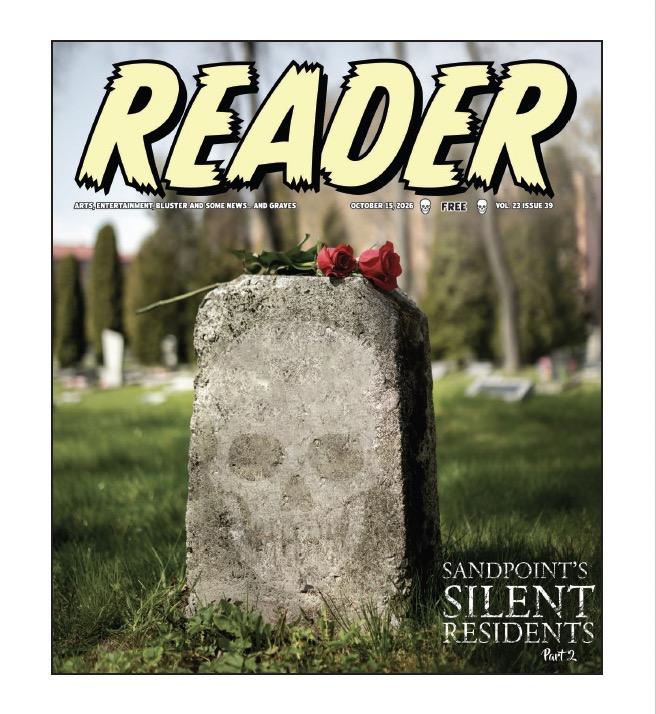
Photo illustration by Ben Olson.
More dire, the article considers that the repulsion felt by many toward public book-readers stems from the “deprioritization of the written word.”
With so many forms of media tailored for rapid, passive consumption — or, in the case of generative AI, rapid, passive creation — what’s the point of settling for a singular narrative that may require hours, days or even weeks of sustained concentration?
Even more depressing, Brickner-Wood writes:
“Performative reading has emerged as a suspicious activity not because reading books is suspect but because being beheld reading a book is understood to be yet another way for one to market himself, to portray to the world that he is indeed deeper and more expansive than his craven need for attention — demonstrated by reading a difficult book in public — suggests.”
That observation implies people have become so trained to the algorithmic ebb and flow of how information and personalities are presented via a screen that any action (even in the real world) is clocked as if it’s being curated for viral online consumption. Everything is a commercial, including reading a book.
“When did life become a land mine of possible performative gestures?” Brickner-Wood writes, later adding, “If our culture of liberal individualism demands anything of us, it is to be, above all else, authentic. To be seen as a poseur or a phony — a person who affects rather than is — violates some nebulous code of acceptable self-cultivation.”
We must “keep it real” at all times and at all costs, whatever that means.
It’s a good read, but a question that gets lost along the way and deserves asking is why reading a book, specifically, elicits such a negative response as somehow affected or “phony.” It’s not just the “deprioritization of the written word” in a galaxy of digital “content,” nor is it the hair-raising stats that show Americans are not just becoming less literate but less capable or willing to understand what they can or wish to read.
The missing component to the “performative reading” backlash is guilt.
People know that it’s better for their mind, body and spirit to read a book than it is to spend between seven and 11 hours or more per day consuming whatever is on the nearest screen (which are the numbers most sources cite for the average American — and, let’s admit, we’re all “the average American”).
It’s the same as running, biking, swimming, taking a walk or simply “touching grass.” It’s the same as eating healthy or doing yoga, meditating or playing an instrument, painting or making anything with your hands.
Everyone, whether they’re conscious of it or not, knows all those things are healthy; and, when we see someone else doing them while we’re not, it’s a common reaction to despise them because we know we should be doing those things, too.
There’s guilt in that reaction, but also some shame spiced with jealousy.
Sure, there’s a flex inherent in whipping out War and Peace on a crowded plane when everyone else is putting their brains on autopilot with whatever device they have at hand, but so what? Better to performatively read than underperformatively exist. Really, in the end, which of those “performances” is more authentic anyway?
Want to support independent local journalism?
The Sandpoint Reader is our town's local, independent weekly newspaper. "Independent" means that the Reader is locally owned and operated by people who were born and raised in Sandpoint. The Reader is owned by Publisher Ben Olson, Editor-in-Chief Zach Hagadone and Senior Writer Soncirey Mitchell. Sandpoint Reader LLC is a completely independent business unit; no big newspaper group or corporate conglomerate or billionaire owner dictates our editorial policy. And we want the news, opinion and lifestyle stories we report to be freely available to all interested readers - so unlike many other newspapers and media websites, we have NO PAYWALL on our website. The Reader relies wholly on the support of our valued advertisers, as well as readers who voluntarily contribute. Want to ensure that local, independent journalism survives in our town? You can help support the Reader for as little as $1.
TIMBER WARS: Six-part series, February-November 2022. GO READ IT»
WHERE ARE THE WORKERS?: Five-part series, September-October 2021. GO READ IT»
THE AMERICAN REDOUBT: Seven-part series, November-December 2017. GO READ IT»
STANDOFF AT RUBY RIDGE: 25 Years Later. Five-part series, August-September 2017. GO READ IT»
Curious about what media the locals use? Check our 2018 Local Media Survey. GO SEE »
Sandpoint in Pictures
Filmmaker Jimmy Matlosz of the Idaho Film Company has made a series of mini documentaries about influential Sandpoint locals, including the late Dann Hall and Erik Daarstad as well as icons Diane Michaels and Dan Shook. He is currently working on a series of interviews connected to the history of the Panida Theater. Jimmy is a 30-year veteran filmmaker who's work can be seen at dpmatlosz.com.
Meet the Reader
Ever wonder who makes the Reader happen? Here's a behind-the-scenes look pieced together by summer 2017 intern McCalee Cain in which Ben, Cameron and Lyndsie explain what exactly about the Reader keeps them coming back to their shabby (but well-loved) office each week.