Recapping some of the biggest headlines of the year… pray for us
By Zach Hagadone Reader Staff
At the end of the introductory paragraph in the 2024 “Year in Review,” we congratulated Reader readers on “making it through 2024” and extended “best wishes for 2025.” As usual, we didn’t know what we were in for with the turn of the calendar page.
It’s hard to identify a single word to describe the overall experience of persevering through the past 12-ish months — “nightmarish,” “soul-sucking,” “infuriating” and “garbage” all come to mind — though the Oxford University Press decided that the “word of the year” should actually be a phrase: “rage bait.” (It was “brain rot” in 2024.) That tracks.
As has become our custom, we again present a rundown of some (but of course not all) of the stories that we felt made for the biggest headlines this year. Read it and weep, like we did.
The Trump defect
As with many things that “trickle down” — like, say, leaky diapers and burst pipes — the noisome seepage of the Trump administration over the past 11 months has befouled almost everything below it, from federal to state to local goings on.
At the risk of staring too long into the abyss, we’re going to make this a quick rundown of how the torrent of fast-food-and-bile loaded effluent flowing from the White House has dribbled into state and local affairs.
Immediately upon his Jan. 20 inauguration, President Donald Trump shotgunned the republic with 26 executive orders — more than any president on their first day in office — including one pardoning every convicted Jan. 6, 2021 Capitol insurrectionist, emboldening fascists around the nation and maybe even the world.
Looking east from the War Memorial Field parking lot. Photo by Ron Bedford
Before the month was out, he froze the federal budget so tech-bronster and trillionaire Elon Musk could chainsaw the government in the name of “efficiency.” That played out most visibly in Idaho with the U.S. Forest Service closing offices both here and elsewhere in the state, as well as the U.S. Army Corps of Engineers shuttering the popular Springy Point Recreation Area in May for lack of staff (services were also reduced at other Corps-managed sites throughout the area).
Meanwhile, Trump’s smooth-brained tariff scheme triggered a trade war with Canada — exacerbated by his saber rattling about turning our neighbors to the north into the 51st state. Predictably, the number of Canadian visitors, as well as freight shipments, southbound into Idaho plummeted.
That prompted a rare foray into politics by the International Selkirk Loop Board of Directors, normally focused on tourism, which wrote in June: “Trade disputes and travel restrictions threaten not only our businesses but also the generations of good-neighborly trust and collaboration that have existed here for centuries.”
Otherwise, Trump’s Chaos Agenda has made life objectively crappier on every level for Idahoans who pay more; make the same or less; can’t afford food or shelter; fear for their access to and ability to pay for health care, reproductive and otherwise; look with dismay at “trickle-down” effects on reduced federal support for, well, everything they rely on; and generally feel a justifiable sense that there’s a madman steering the ship of state.
As estimated 1,200 people showed up for the “No Kings” protest on Oct. 18 in Sandpoint. Photo by Ben Olson
Down with The Don
Following all that, millions of upright citizens around the nation have been protesting their asses off since the inauguration. Here in Sandpoint, we had a “Not My President” demonstration in February, followed by a “Hands Off” protest in April — that was, “Hands Off” the Constitution, as Trump has and continues to shred the nation’s guiding document daily — then two “No Kings” rallies in June and October. The latter drew an estimated 1,200 people to First Avenue, lining both sides of the street from Superior to Pine and making it among the largest such demonstrations in the state — behind only the capital city of Boise, Coeur d’Alene, Pocatello and Idaho Falls (all far larger than little ol’ Sandpoint). Was anyone listening? Who knows, but it was a good look.
Poop plant politics
Sandpoint City Hall started the year by taking the first significant step in what Mayor Jeremy Grimm has repeatedly called his “No. 1 priority” in office, and rightly described among the biggest projects ever undertaken by the community: reconstructing the wastewater treatment plant.
Things kicked off in January with a letter of interest to the state seeking funding for the $130 million project — which resulted in a $3.5 million award, and nothing from the feds (surprise, surprise). Undaunted, City Hall pressed on with public outreach including open houses, presentations and a survey through the spring and summer, resulting in a ballot measure in the November election that passed with almost 90% in favor. Now comes the effort to raise enough outside money so sewer rates don’t double over five years.
Park and deride
In the 2024 “Year in Preview,” we foresaw that the “word of the year” at City Hall would be “water.” That was kind of true, but it really turned out to be “parking.” Starting in January, the Planning and Zoning Commission and City Council were dominated by discussions surrounding instituting a paid parking program at several city-owned lots, including City Beach (more on that later).
Given that getting pissed off about stuff is the municipal sport of Bonner County, it came as no surprise that many people’s heads exploded when faced with the notion that they’d have to shell out or walk a few blocks to their destination. The city spent the next few months tweaking the fees, fast-tracking a reconstruction of the city lot between Church and Oak streets, and trying to calm tempers — especially among county residents who didn’t think it was fair that they had to contribute to the use of infrastructure that they don’t pay taxes to support.
And if that wasn’t enough of a head-exploder, the city floated the idea of reintroducing parking meters on downtown core streets, where they’d stood from the 1920s until the late-’80s or early-’90s. That idea “was not received well, you could say,” Planning and Community Development Director Jason Welker said in September, following a presentation on the concept to downtown merchants.
While the idea of parking meters isn’t off the table, it isn’t front-and-center as the city continues to refine its parking management policy, which from April to present has shifted from downtown to how to regulate parking requirements in residential areas — specifically as they relate to multi-family developments and short-term rentals.
Life’s (not) a City Beach
For generations of area residents, City Beach has been a place for fun, sun (part of the year) and general free, public recreation (also goose poop, though mercifully that local debate seems to have calmed for now). In 2025, however, it became a bit of a political battleground as more details emerged about plans for Whitefish, Mont.-based Averill Hospitality Group’s luxury resort hotel on the site of the current Best Western Edgewater.
Straight out of the gate in early January, the Bonner County Republican Women sent a shot over City Hall’s bow with a widely read op-ed claiming City Beach was being “privatized” following a decision in late 2024 to reduce the number of parking spaces required of Averill’s development at the same time as the lot at the beach was being primed to move to a paid system.
In a minor miracle, the Bonner County Democrats agreed with the Republicans, writing in part, “reducing the number of parking spaces makes City Beach less accessible to people, and that the people who will be affected the most are our residents.”
For its part, City Hall argued that like any other developer, Averill was entitled to seek a reduction in required parking stalls in exchange for an in lieu fee, and the company promised the community that its guests would not be using the beach parking lot, thus pushing out locals.
News then circulated that Averill would be reducing the number of hotel rooms and adding condos to the development. In late February, the Republican Women again weighed in, decrying an approved reduction in the fee to be paid by Averill for its foregone parking spaces. The argument from critics was that the city was acquiescing to the developer to the detriment of public access at City Beach.
That perception ramped up further in September, when the City Council voted to delay the implementation of increased development impact fees until after the new year, even as Averill warned that paying the higher fees would make the $100 million development “unviable.”
While city officials said the decision had nothing to do with that, many citizens were unconvinced. Tensions rose even higher in early November, when Averill came to the city again saying that its resort hotel would be “unviable” unless the RV park across Bridge Street was either leased or sold to the company and turned into something more aesthetically palatable for its future guests and condo-dwellers.
That was the final straw for a lot of people — including some councilors — who expressed the opinion that “we’re being played” by the developer, which kept asking for (and receiving) concessions underpinned by the not-so-veiled insinuation that it would take its ball and go home, or else.
Recognizing the bad optics, Averill officials openly apologized for the tone of the communication. However, the council voted to reject the company’s “request” for the purchase or lease option.
At the same time, the state cleared the way for a nearly $1 million grant for the city to redevelop the RV park, with plans to fix up the site, add some bathroom facilities and provide access for non-motorized watercraft.
Following the November mea culpa from Averill, the city posted a public survey seeking input on future plans for the site and hosted a mid-December workshop that drew a standing-room-only crowd to the James E. Russell Sports Center — on a Saturday morning, no less.
The overwhelming majority of about 1,000 survey respondents (as of press time) preferred a renovated RV park, regardless of Averill’s desires. That also seemed to be the consensus at the December workshop, but some advocated for a multi-use space and others worried that taking the grant dollars would unduly obligate the city to retain the RV park for 25 years. Averill representatives in attendance said they were “here to help” and offered to donate an unspecified amount of money to offset the grant money, if only the RV park could be “something else.”
What happens next will be up to the Parks and Rec. Commission and the incoming City Council, with new members Joe Tate and Joshua Torrez. Hopefully no one promised them life’s a beach.
Budgets go bust
It’s no secret that the Idaho Legislature jumped the track at least 15 years ago, as the Wackadoodle Wing of the Republican Party has calcified its monstrous supermajority in the Statehouse, aided and abetted by the perfidious closed primary system and fueled by torrents of dark money laundered through a constellation of political action committees, lobbies and ideological canker sores like the Idaho Freedom Foundation and its cancerous ilk.
We’re really reaping the whirlwind now, though, as following the general chaos at the federal level, basic functions of government in Idaho teetered into “failed state” territory in 2025.
Very, very long story short: In the rush to see who could debase themselves the most before Trump’s altar of “cupidity, stupidity and the positive power of lying” (to borrow a phrase from Hunter S. Thompson), a large majority of Idaho GOP lawmakers sold us all out by stripping upward of half a billion dollars in tax revenue while throwing all manner of gimmies to right-wing policy hobbyhorses — most notably a “tax credit” (a.k.a. “vouchers,” a.k.a. “unaccountable handouts”) to private, religious education using public dollars in a sinister circumvention of Idaho’s Blaine Amendment to the state Constitution.
Trumpian lickspittles like Gov. Brad Little got some super-cool shoutouts from Trump on social media for this betrayal, and we’re sure they bathed in that glory for a few weeks in February and March; but, by mid-spring, it became clear that a budget doesn’t balance if you spend more than you make. Who knew?
The “school choice” baksheesh amounting to about $50 million — which will all but certainly benefit right-wing affiliated online “education” providers and also all but certainly increase — destabilized Idaho’s checkbook, resulting in a cascade of headlines that whipsawed from the “triumph” of “conservative” budgeting to “holy-shit-we-have-to-cut-everything.”
Credit must be given to two of our local legislators — Dist. 1 Sen. Jim Woodward, R-Sagle, and Dist. 1A Rep. Mark Sauter, R-Sandpoint — who sounded the alarm loud, early and often that we were on a collision course with reality. Dist. 1B Rep. Cornel Rasor, R-Sagle, appears to be MIA in all this, but he’s spent decades buzzing around loony libertarian circles as a mosquito pretending to be a hornet.
Meanwhile, estimates have varied wildly between an unconstitutional budget deficit in the tens of millions to hundreds of millions of dollars, as (apparently) our Little Trumps didn’t realize that DOGE-ing the federal government would also affect state revenue, as on top of all the cuts and spends “we” approved in the 2025 legislative session would be compounded by complying with federal spending reductions.
That is, unless there’s been a concerted effort to destroy the functioning of civil government at the federal and state levels over the past year in order to replace it with a variety of privately contracted “services” that just so happen to enrich certain organizations, institutions and individuals. It would be even worse if that whole system was overseen by an authoritarian executive with total police and military power and no legislative or judicial check.
Jeez, that would be a weird and kind of conspiratorial idea.
Regardless, as the kids say, “FAFO.” Don’t forget to vote in 2026.
Public lands, not grubby hands
Oh hey! Here’s another shitty thing that happened this year: We started talking seriously about transferring all of our public lands from federal stewardship to state control, which would literally be a devolution of our physical country, and fitting to occur next year, on the 250th anniversary of our revolution actually putting us together (well, sort of).
But that’s what we do, apparently. And by “that,” we mean, being as stupid as possible at all times and always for money.
No matter, the federal government owns about 32.8 million acres of Idaho’s land — accounting for a skosh below 62% of the total area — which ranks the Gem State ahead of Alaska though behind Utah, according to congress.gov. These are lands that we, the people, own together because we’re a federal republic. Duh.
Let’s be clear: The states have never “owned” these public lands, therefore there’s no such thing as “giving them back” to the individual states. The U.S. Constitution (that pesky document) states plainly in the Property Clause: “The Congress shall have power to dispose of and make all needful rules and regulations respecting the territory or other property belonging to the United States.”
Yet, the grift goes on, with gobs of Western right-wing politicos peddling the timeworn Sagebrush Rebellion myth of state supremacy over land and thereby the property therein, which is really shorthand for the anti-federal animus of the freakin’ Civil War. (You know, the one that the South lost on the question of “states’ rights”… to do what? Own “property.” Yeah.)
As the American Constitution Society puts it: “Under state ownership, state governments could restrict public access, authorize commercial development or even divide lands for private sale. Current federal environmental law effectively forecloses these possibilities, limiting privatization and preventing environmental degradation.”
And that’s exactly what over-cologned, too-coiffed, meathead lawmakers like Idaho Republican Rep. Russ Fulcher are angling for.
Trailing after Utah Republican Sen. Mike Lee, Fulcher has been the poster boy for the selloff, claiming that there’s no appetite among states in the East to subsidize us in the West. Rep. Mike Simpson, R-Idaho, split with that idea in April, joining a bipartisan Public Lands in Public Hands Act.
Despite the fact that fellow Idaho Republican Sens. Mike Crapo and Jim Risch eventually joined Simpson in opposing this latter-day deconstruction of the nation’s surface area for private profit (we’re sure after seeing the polling that indicates a massive majority of Idahoans want public lands to stay public), Fulcher still shills. He was back on the stump in early December, and it won’t be the last we hear of this attempted burglary. We reckon there are easier, though more embarrassing, ways to get Trump’s attention. Don’t forget to vote.
City Hall monitor
Yeesh, we’re getting tired, so here’s a little lightning round of other City Hall stuff: the James E. Russell Center’s revenue delivery vs. projections were way off, by, like, a lot. That seemed to justify many area residents’ opinion that razing Travers Park for a specialty court sports barn just because we got a “gift” (fun fact: the word gift in German means “poison”) wasn’t in the overall best interest of the community.
The city’s been tinkering around throughout the year on how to make that thing make sense, and they might be getting there — it remains to be seen, as the numbers are looking a little better — but we have it on good authority that it’s proved to be an albatross, siphoning funds from other, more generally used and accessible public park facilities. That’s a “gift” indeed.
We had other drama at the city, when Mayor Jeremy Grimm told the City Council that he wasn’t getting paid enough and notified them that he’d be acting his wage by cutting back hours in City Hall to essential duties (including meetings) unless a raise was in the offing. So far, it hasn’t been. Meanwhile, there’s serious talk of bringing back the city administrator position, which a good chunk of the current council — and the mayor — ran on eliminating.
That whole thing seems to have triggered a bunch of other internal politics getting aired in public, with a frankly bizarre fracas over whether or not City Attorney Fonda Jovick actually worked for the city, as she has for several years. Regardless, Grimm tried to replace her with longtime former-City Attorney Will Herrington, but that didn’t fly with councilors, enough of whom walked out of a mid-October session to break quorum and extend the drama until later in the month, when Jovick was “officially” sworn in. However, she’s been a rare sight in the chambers ever since.
Arguably the biggest City Hall controversy of the year, however, was in November and surrounded the debate over Sandpoint’s groundbreaking non-discrimination ordinance. That is, the “amendment” of the NDO into oblivion by removing anything related to gender identity and aligning city policy with state human rights law that, of course, famously excludes anyone who actually needs protection.
There aren’t enough showers that a thinking person could take — regardless of who’s in the shower with them — to wash off the stench of the treacherous, intellectually dishonest, bigoted, mean-spirited and craven vote taken by council to essentially strike down the NDO because of a speculation based on a rumor of an apparently “biologically male” using the women’s washroom at the Litehouse YMCA sometime in October.
No actual evidence was ever produced of any wrongdoing nor policy or law violation, no firsthand testimony given, nothing. Just hearsay feeding moral panic meant to benefit a specific band of politics. And it all came from a Facebook post, resulting in Sandpoint overturning its pioneering non-discrimination ordinance, which had served as the template for similar protective pieces of code around the state, including Boise. That’s where we are now, folks. It’s not a good place.
The votes: Councilors Joel Aispuro, Justin Dick and Rick Howarth in favor (of “amending”); Council President Deb Ruehle and Councilors Pam Duquette and Kyle Schreiber against. Grimm broke the tie and later pretended to have taken the high ground in some kind of brave stance to “protect our women and girls,” which was the perverse mantra of the trauma-ghoul dramatists who testified in droves at that particular meeting like it was a snake-handling swamp church service.
How quickly this social media frenzy turned into a torches-and-pitchfork set of council meetings speaks ill of the community at large, though was oh-so-convenient for the skidmark branch of the local Witchfinder General Party of outrage-chancers like Scott Herndon, who (of course) is challenging Woodward for the Dist. 1 Idaho Senate seat in the 2026 election. Don’t forget to vote.
Roundup at the BoCo Corral
At this point, we’re so incensed by the rank idiocy and corruption (or corrupt idiocy) infecting every aspect of American life — from the nation’s capitol to down the street — that it’s a real suffering to even contemplate the county. Yet we must, and that beat began in the New Year with Bonner County Sheriff Daryl Wheeler “retiring” for 30 days so he could collect his benefits under the Public Employee Retirement System of Idaho and his regular salary when he “returned.” Slick move.
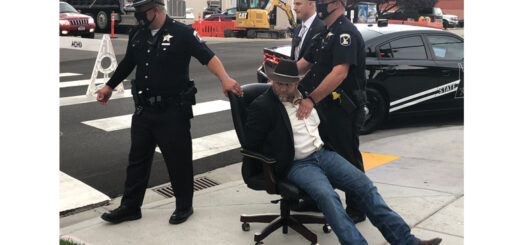
Around the same time, inveterate gadfly Rick Cramer won his lawfare jackpot with a $275,000 settlement (your tax dollars) and an official apology letter that brought an end to a yearlong issue stemming from his trespassing and citizen’s arrest by former-Commissioner Luke Omodt.
Then there’s the ongoing drama of the Panhandle Bike Ranch, which in June saw its conditional use permit vacated. Area neighbors opposed the potential traffic, noise and dust generated by the facility, and went to the First Judicial Court of Idaho, which nixed the permit due to a lack of reasoning presented by the county.
Owners Scott and Jennifer Kalbach operated PBR over the summer, accepting donations rather than selling tickets, to apparently skirt the lack of CUP — though this didn’t stop neighbors from reporting their actions to the county Planning Department in an attempt to get them fined.
The issue is now in the hands of the Kalbachs — who are supported by biking enthusiasts across the U.S. and Canada — to reapply for the CUP or switch gears.
On top of all that, after inadvertently violating Idaho Open Meeting Law and incurring an investigation from the Attorney General’s Office, the county finally revised its minor land division policy. That sounds super unsexy, but really it affects how, where and when this area turns into the suburban-strip mall monstrosity that’s become of the Rathdrum Prairie.
Crickey! There’s also the interminable dysfunction of the Bonner County Fair Board, which a former bookkeeper in late November revealed has been operating with incompetent accounting procedures ranking as a Bush League Enron. It was (and might still be) as bad as accidentally paying their own accountant so much money that she gave back part of the money and resigned.
Bonner County can’t even have a fair without screwing it up.
And, finally, it’s looking like the Idaho Club’s gentrification of Trestle Creek is going to happen, with a December approval of amendments to the existing CUP. Who cares that multiple environmental protection groups and hundreds of residents have opposed the development on the grounds (or waters) that it will wreck the ecosystem, going so far as to file multiple lawsuits. Oh, and Sandpoint Mayor Jeremy Grimm represents the developers in his private practice. He says he’s not running again.
End of Days?
We ended this garbage heap of a year with a bunch of terrible weather in mid-December, adding high winds and major flooding to the famine of sky-high prices for food, health care and everything else (what other plagues are next?). Folks, it’s a suffering.
Additional reporting by Soncirey Mitchell.
Want to support independent local journalism?
The Sandpoint Reader is our town's local, independent weekly newspaper. "Independent" means that the Reader is locally owned and operated by people who were born and raised in Sandpoint. The Reader is owned by Publisher Ben Olson, Editor-in-Chief Zach Hagadone and Senior Writer Soncirey Mitchell. Sandpoint Reader LLC is a completely independent business unit; no big newspaper group or corporate conglomerate or billionaire owner dictates our editorial policy. And we want the news, opinion and lifestyle stories we report to be freely available to all interested readers - so unlike many other newspapers and media websites, we have NO PAYWALL on our website. The Reader relies wholly on the support of our valued advertisers, as well as readers who voluntarily contribute. Want to ensure that local, independent journalism survives in our town? You can help support the Reader for as little as $1.
TIMBER WARS: Six-part series, February-November 2022. GO READ IT»
WHERE ARE THE WORKERS?: Five-part series, September-October 2021. GO READ IT»
THE AMERICAN REDOUBT: Seven-part series, November-December 2017. GO READ IT»
STANDOFF AT RUBY RIDGE: 25 Years Later. Five-part series, August-September 2017. GO READ IT»
Curious about what media the locals use? Check our 2018 Local Media Survey. GO SEE »
Sandpoint in Pictures
Filmmaker Jimmy Matlosz of the Idaho Film Company has made a series of mini documentaries about influential Sandpoint locals, including the late Dann Hall and Erik Daarstad as well as icons Diane Michaels and Dan Shook. He is currently working on a series of interviews connected to the history of the Panida Theater. Jimmy is a 30-year veteran filmmaker who's work can be seen at dpmatlosz.com.
Meet the Reader
Ever wonder who makes the Reader happen? Here's a behind-the-scenes look pieced together by summer 2017 intern McCalee Cain in which Ben, Cameron and Lyndsie explain what exactly about the Reader keeps them coming back to their shabby (but well-loved) office each week.