By Sandpoint Mayor Jeremy Grimm Reader Contributor
Many of us feel the pinch of rising costs, from groceries to gas to utility bills. Taxes are no exception, and people are right to expect that their hard-earned dollars are spent wisely. These conversations are important because they remind us of the need for accountability, transparency and fairness in how our community is managed.
In Idaho, property taxes are governed by strict limits. State law caps cities at no more than a 3% annual increase in revenue from existing properties, plus new construction and annexation. For Sandpoint’s Fiscal Year 2026 budget, that means about $153,000 in additional revenue from existing property owners and $82,000 from new growth. Against a $49 million budget supporting more than 100 employees and every city service, this is less than half of 1%. Meanwhile, the city faces the same cost pressures as households and businesses: Medical insurance alone rose by more than $200,000 last year, and fuel, insurance and labor costs continue to climb.
Our commitment is to manage within these constraints while protecting the services that make Sandpoint safe and livable — police and fire protection, passable streets, clean water, sewer, parks and planning. We’ve reduced the overall budget in each of the past two years, even while increasing investment in infrastructure.
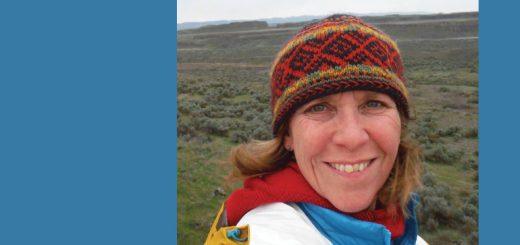
Sandpoint Mayor Jeremy Grimm. Courtesy photo.
We also work to make sure people know where their money goes. Anyone can visit the city’s website and, through our ClearGov portal, see line by line how funds are allocated. Transparency is not just a word — it is a practice we take seriously.
The most pressing challenge we face is our wastewater treatment plant. Portions of this facility date back to the 1940s, and it no longer meets today’s clean water standards. Breakdowns in pumps and control systems are not “what if” scenarios — they have already happened. We are legally and morally obligated to ensure the river remains clean for future generations.
Decades ago, when the Clean Water Act was passed, the federal government provided substantial funding to help communities build modern plants. That is no longer the case. Similarly, state priorities have shifted. This year’s state income tax cut (House Bill 40) will save the average Sandpoint household about $268 annually; but, without outside support, our community could face increases of roughly $1,200 per year in sewer rates to finance a $130 million replacement. If the state of Idaho were to invest even a portion of what it spends on tax reductions into infrastructure, the savings for local households would be far greater.
Infrastructure is the foundation that allows the private sector to grow, attract investment, create jobs and provide opportunity. It is not just about pipes and pumps — it is about competitiveness, quality of life, and the confidence that our children and grandchildren will inherit a healthy, sustainable community.
Another important piece of this conversation is fairness. City residents contribute directly to the services they receive — on my own bill, $2,132 goes to the city of Sandpoint. Residents outside the city do not pay into the city budget yet freely use our parks, beaches and downtown amenities. At the same time, city residents also pay county taxes — on my bill, another $1,287 — funding the sheriff’s office and county roads, even though Sandpoint provides its own police and street department. In effect, city residents are paying for both, while much of the broader county enjoys city amenities at no direct cost.
This is why we are considering ways to share costs more fairly, such as modest paid parking at City Beach and downtown lots. The goal is not to burden anyone but to make sure that everyone who benefits helps contribute to the upkeep of these valued community spaces.
Sandpoint is not immune to the pressures facing small towns across the country. But we are committed to managing responsibly, living within our means and planning for the future.
The wastewater treatment plant is a once-in-a-generation responsibility. Addressing it is not about fear, but about stewardship — ensuring that we leave Sandpoint stronger, cleaner and more resilient for those who come after us.
Jeremy Grimm has served as Sandpoint mayor since 2024, served as Sandpoint city planner from 2007-2015 and is owner/land use planner at Whiskey Rock Planning + Consulting.
Want to support independent local journalism?
The Sandpoint Reader is our town's local, independent weekly newspaper. "Independent" means that the Reader is locally owned and operated by people who were born and raised in Sandpoint. The Reader is owned by Publisher Ben Olson, Editor-in-Chief Zach Hagadone and Senior Writer Soncirey Mitchell. Sandpoint Reader LLC is a completely independent business unit; no big newspaper group or corporate conglomerate or billionaire owner dictates our editorial policy. And we want the news, opinion and lifestyle stories we report to be freely available to all interested readers - so unlike many other newspapers and media websites, we have NO PAYWALL on our website. The Reader relies wholly on the support of our valued advertisers, as well as readers who voluntarily contribute. Want to ensure that local, independent journalism survives in our town? You can help support the Reader for as little as $1.
TIMBER WARS: Six-part series, February-November 2022. GO READ IT»
WHERE ARE THE WORKERS?: Five-part series, September-October 2021. GO READ IT»
THE AMERICAN REDOUBT: Seven-part series, November-December 2017. GO READ IT»
STANDOFF AT RUBY RIDGE: 25 Years Later. Five-part series, August-September 2017. GO READ IT»
Curious about what media the locals use? Check our 2018 Local Media Survey. GO SEE »
Sandpoint in Pictures
Filmmaker Jimmy Matlosz of the Idaho Film Company has made a series of mini documentaries about influential Sandpoint locals, including the late Dann Hall and Erik Daarstad as well as icons Diane Michaels and Dan Shook. He is currently working on a series of interviews connected to the history of the Panida Theater. Jimmy is a 30-year veteran filmmaker who's work can be seen at dpmatlosz.com.
Meet the Reader
Ever wonder who makes the Reader happen? Here's a behind-the-scenes look pieced together by summer 2017 intern McCalee Cain in which Ben, Cameron and Lyndsie explain what exactly about the Reader keeps them coming back to their shabby (but well-loved) office each week.