By Soncirey Mitchell
Reader Staff
At this time of year, the world is abuzz with thoughts of love. Young and old couples turn their minds to chocolates and romantic dinners, and schoolchildren cut out paper hearts to pass out to their favorite valentines. Unfortunately, the Reader has written just about everything there is to write about this amorous holiday, so instead of meditating on sweethearts (both the lovers and the candy), let’s talk about anthropophagy.
Anthropophagy: from the Greek anthrōpos, meaning “human,” and phagein, “eat.”
Cannibalism: from the Spanish rendering of the Indigenous Taíno Caniba or Carib, denoting the Kalinago people of the Lesser Antilles. This is also where the term “Caribbean” comes from.
While “cannibalism” can now apply to any species that eats its own kind (and there are more than 1,500 recognized species that do so), “anthropophagy” specifically denotes human cannibalism, which is likely as old as the species itself.
According to Science, there is evidence of Neanderthals eating one another as early as 100,000 years ago in modern-day France, and fully fledged humans engaged in forms of cannibalism beginning at least 15,000 years ago in England. Almost every culture around the world has recorded instances — either widespread or specific — of one human eating another, and the reasons for the act are as diverse as the people who engage in it.
Anthropophagy can be separated into three distinct categories: institutionalized, survival or psychopathological. Institutionalized cannibalism is an action that the culture at large accepts as morally acceptable or correct. This can vary from widespread practices of consuming one’s enemies after a battle, sacrificing and eating someone in a religious rite, or, as was especially popular in Europe, the act of medical cannibalism.
From the 11th through the 19th century in Europe — particularly during the 15th century — it was en vogue to consume blood or body parts to treat a range of ailments and, apparently, the most coveted of these medicinal corpses were mummies.
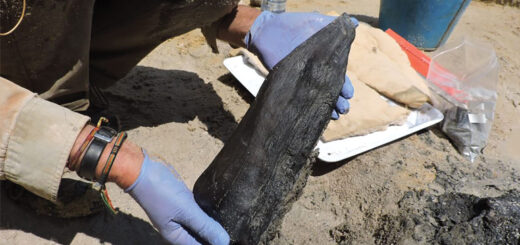
According to National Geographic, a series of misunderstandings and mistranslations likely led Europeans to grind up Egypt’s mummies into digestible powders. In the 11th century, when Europe was just getting to know the Islamic world, word spread of a black, tar-like substance coveted by the Persians for its healing properties. They called this natural material mumia, which European scholars apparently confused with “mummy,” leading them to believe that the medicine came from embalmed bodies. What followed was a rush on the mummy market that had graverobbers digging up random corpses and passing them off as the genuine article to hungry customers — literally.
Modern cultures see survival or famine cannibalism as a bit more understandable, if disgusting, having heard tales of the Donner Party and the members of Uruguayan Air Force Flight 571 doing whatever it took to stay alive. People only resort to this type of cannibalism when faced with the possibility of starvation and death, and the desperate act can be further divided into two subcategories: necro-cannibalism (eating someone who has already died) and homicidal cannibalism (which is self-explanatory). According to A People’s Tragedy: The Russian Revolution, 1891–1924, thousands resorted to anthropophagy during the Russian famine of 1921, with bands actively hunting and butchering people for food.
The least common form is psychopathological cannibalism, which is only found in the extreme cases of murderers like Jeffrey Dahmer and Albert Fish — a.k.a. the “Moon Maniac” — who often derive sexual pleasure from the act. In one particularly famous case, cannibal Armin Meiwes spent most of his life fantasizing about consuming human flesh, but wanted to do so consensually. In 2001, he met volunteer Bernd Brandes online, and after talking every day for months, the two arranged Brandes’ murder and subsequent ingestion. Meiwes was later charged with murder and “disturbing the peace of the dead” under German law.
There are other forms of consensual anthropophagy, including autocannibalism — or autophagy — which is the act of eating oneself. Often, this stems from curiosity or pathological behavior, but history has shown it can also be used as a means of torture. Some consider disorders like onychophagy (fingernail-biting), dermatophagy (skin-biting, usually around the nails) and trichophagy (hair-eating) to be forms of self-cannibalism, but there are at least four confirmed instances in the past decade of people taking things a step further. Many people, with or without the influence of mental health issues, drugs or alcohol, have reportedly consumed their own flesh after medical amputation or self-mutilation. Several of these cases involve carefully cooked fingers, but the more extreme self-cannibals have consumed raw eyes or flesh stripped from their thighs.
I think I’ll stick to Valentine’s candy.