By Soncirey Mitchell
Reader Staff
Earlier this month, the Idaho Supreme Court ruled against Bonner County and local developers Tricore Investment, LLC, in a yearslong case regarding two contiguous minor land divisions outside of Coolin. Though the county no longer uses MLDs, the ruling sets a precedent for legal review of additional land use decisions not explicitly outlined in Idaho’s Local Land Use Planning Act.
Tricore purchased three parcels along Priest Lake in 2021, which it later split into 35 lots through a series of 54 quitclaim deeds, transferring ownership “to and from itself,” according to the ruling. Tricore was therefore able to divide the land without triggering the Bonner County Planning and Zoning process or a review under LLUPA. Developers later filed for two contiguous MLDs, which the Bonner County Board of Commissioners approved, creating four lots each. At the time, Bonner County defined MLDs as any “division of land into four (4) or fewer lots or parcels.”
Neighboring property owners appealed both approvals, arguing that Tricore was creating a de facto subdivision without the necessary process or infrastructure, and that the divisions did not meet noticing requirements or environmental standards. The county later enacted code forbidding contiguous MLDs before replacing the process entirely in 2025 with “short” and “long” subdivisions.
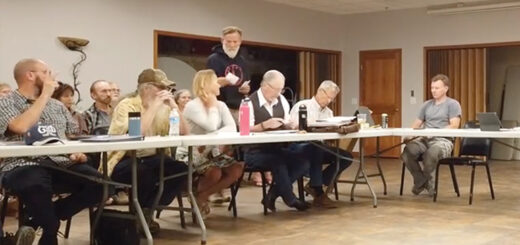
“One of those people says it looks as though this developer was trying to avoid the subdivision requirements,” stated county legal counsel Bill Wilson in a public meeting in October 2022. “It doesn’t just look like it, they 100% were.”
Still, according to the ruling, the county’s legal counsel concluded that Bonner County Code “did not explicitly prohibit deliberate avoidance of county land planning regulations.”
County commissioners denied the neighbors’ appeals, causing them to file for legal review. The district court vacated the MLDs and remanded them to the BOCC because the county’s approvals lacked a “reasoned statement, finding of fact and conclusions of law” and so did not meet procedural requirements. Tricore and the county appealed the ruling, arguing that MLDs were not subject to judicial review under LLUPA because they are not explicitly listed in the code.
Idaho Code 67-6521 gives LLUPA jurisdiction over the “approval, denial or failure to act upon an application for a subdivision, variance, special use permit and such other similar applications required or authorized pursuant to this chapter.”
The court agreed, reversing its previous ruling, and prompting Coolin residents to appeal to the Idaho Supreme Court. Legal counsel for the neighboring property owners argued that MLDs fall under “such other similar applications” and are therefore covered by LLUPA.
The Supreme Court sided with the appellants on July 8, 2026, further ruling that though developers applied for MLDs, the contiguous divisions should be viewed in tandem because they were submitted “simultaneously by the same applicant” and therefore “when taken together, the practical effect of the Applications mirrors that of a full-fledged subdivision.”
The ruling also stated that, though Bonner County did not explicitly prevent developers from circumventing county regulations, Tricore’s actions violated case law as it is not permissible to “do indirectly what … is prevented by law from doing directly.”
The Idaho Supreme Court has remanded the matter to the lower courts for further proceedings.