There’s no shortage of places to consume celebrity culture. From award shows and courtside seats to press tours, junkets, movies, television and endless social media reposts, public figures are constantly on display — captured, curated, clipped and served back to us through TikTok and Instagram.
Because of that ubiquity, celebrities often function as a real-time reflection of cultural norms and aspirations. They don’t simply create trends; they embody what culture currently rewards. Careers are built and maintained on relevance and the ability to mirror what audiences find desirable.
Transcending even the most visible trends like severe bobs and tiny sunglasses is something more familiar: ultra-thinness.The collective “shrinking effect” of public figures has become increasingly difficult to ignore, sparking public conversation and unease. Viral before-and-afters circulate constantly: recent tour images of Ariana Grande, videos of Kelly Osbourne and countless side-by-side comparisons that trigger a strange sense of déjà vu.
I hesitate to single out individual women, because commenting on bodies, whether in praise or criticism, rarely leads anywhere useful. Some people are naturally thin. Others are navigating illness, medication, stress or personal health decisions invisible to the public. Health is deeply individual. But this observation isn’t about just one body. It’s about patterns that become codified as beauty standards.
Liz Plank, in her substack Airplane Mode, articulates this well, reflecting, “Ozempic has changed the geometry of celebrity bodies in ways that feel sudden. It’s a lot to absorb. The speed at which women are shrinking feels almost hallucinatory. As though an entire beauty standard has been accelerated in real time. Every week, another female celebrity walks a red carpet with a new bone protruding. The cumulative effect is hard to overstate.”
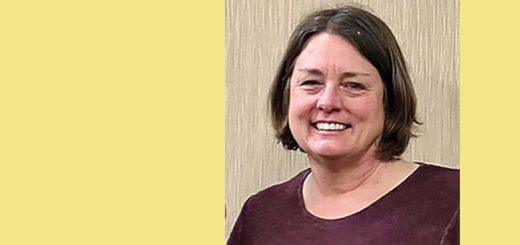
Emily Erickson. Courtesy photo.
Whether driven by medication, styling, changing aesthetics or simply renewed cultural preference, the visual result feels familiar. Along with board shorts and bandana tube tops, we’re borrowing ultra-thinness from Y2K — a time that was notoriously unforgiving to women’s bodies.
In Bridget Jones’s Diary (2001), the protagonist was repeatedly framed as overweight despite weighing an entirely ordinary 136 pounds. In 2009, Jessica Simpson made headlines for touring postpartum while tabloids labeled her “Jumbo Jessica.” Britney Spears was publicly mocked after an award show performance despite appearing visibly athletic.
The trouble with this trend isn’t only the susceptibility of young girls or the decadeslong impact it can have on relationships with eating and self-worth. It’s also the timing of renewed cultural messaging around women taking up less space.
Whether intentional or not, ideals rarely exist in a vacuum. Beauty standards can reinforce broader social expectations — and historically, expectations around femininity have often rewarded restraint, agreeability and self-containment.
Girls are still taught, implicitly and explicitly, that thinness can function as a virtue. And in moments when rights, autonomy and participation feel contested, messages about becoming smaller — quieter, more palatable, more disciplined — carry cultural weight beyond aesthetics.
Assistant professor of psychology at CU Anschutz, Emily Hemendinger, MPH, LCSW, speaks to this connection, stating, “This pressure to be smaller leads to not taking up space, which means not using your voice and not getting your needs met.”
A similar critique emerged during second-wave feminism. As women pushed for broader liberation, the rise of the “waif” aesthetic and ultra-slender beauty standards (championed by a supermodel un-ironically named “Twiggy”) prompted criticism that women were being asked to expand their lives while simultaneously shrinking their bodies.
Viewed through that lens, today’s resurgence of thinness overlaps uncomfortably with “MAHA” wellness absolutism and the trad-wife revival, both of which position discipline, appearance and traditional femininity as morally good (and anything else as morally dangerous).
Of course, not every woman pursuing thinness is making a political statement, nor does every wellness movement exist to limit women’s agency. But it’s worth asking who benefits when self-optimization becomes more consuming than self-determination.
If our energy is endlessly redirected toward managing our appearance, what capacity is left for demanding structural change?
Thankfully, there is already pushback, even if it sometimes feels small relative to the volume of imagery surrounding us. Figures like Olympic rugby player Ilona Maher and the growing body neutrality movement offer another framework: one that de-centers appearance and treats the body less as a project and more as the vessel through which we participate in the much more interesting work of being alive.
With this, resistance should be a continuous act of taking up space as we need, nourishing our bodies and remembering that we’ve got too much work to do to shrink away.
Emily Erickson is a writer and business owner with an affinity for black coffee and playing in the mountains. Connect with her online at www.bigbluehat.studio.
Want to support independent local journalism?
The Sandpoint Reader is our town's local, independent weekly newspaper. "Independent" means that the Reader is locally owned and operated by people who were born and raised in Sandpoint. The Reader is owned by Publisher Ben Olson, Editor-in-Chief Zach Hagadone and Senior Writer Soncirey Mitchell. Sandpoint Reader LLC is a completely independent business unit; no big newspaper group or corporate conglomerate or billionaire owner dictates our editorial policy. And we want the news, opinion and lifestyle stories we report to be freely available to all interested readers - so unlike many other newspapers and media websites, we have NO PAYWALL on our website. The Reader relies wholly on the support of our valued advertisers, as well as readers who voluntarily contribute. Want to ensure that local, independent journalism survives in our town? You can help support the Reader for as little as $1.
TIMBER WARS: Six-part series, February-November 2022. GO READ IT»
WHERE ARE THE WORKERS?: Five-part series, September-October 2021. GO READ IT»
THE AMERICAN REDOUBT: Seven-part series, November-December 2017. GO READ IT»
STANDOFF AT RUBY RIDGE: 25 Years Later. Five-part series, August-September 2017. GO READ IT»
Curious about what media the locals use? Check our 2018 Local Media Survey. GO SEE »
Sandpoint in Pictures
Filmmaker Jimmy Matlosz of the Idaho Film Company has made a series of mini documentaries about influential Sandpoint locals, including the late Dann Hall and Erik Daarstad as well as icons Diane Michaels and Dan Shook. He is currently working on a series of interviews connected to the history of the Panida Theater. Jimmy is a 30-year veteran filmmaker who's work can be seen at dpmatlosz.com.
Meet the Reader
Ever wonder who makes the Reader happen? Here's a behind-the-scenes look pieced together by summer 2017 intern McCalee Cain in which Ben, Cameron and Lyndsie explain what exactly about the Reader keeps them coming back to their shabby (but well-loved) office each week.